
Last updated October 15, 2026
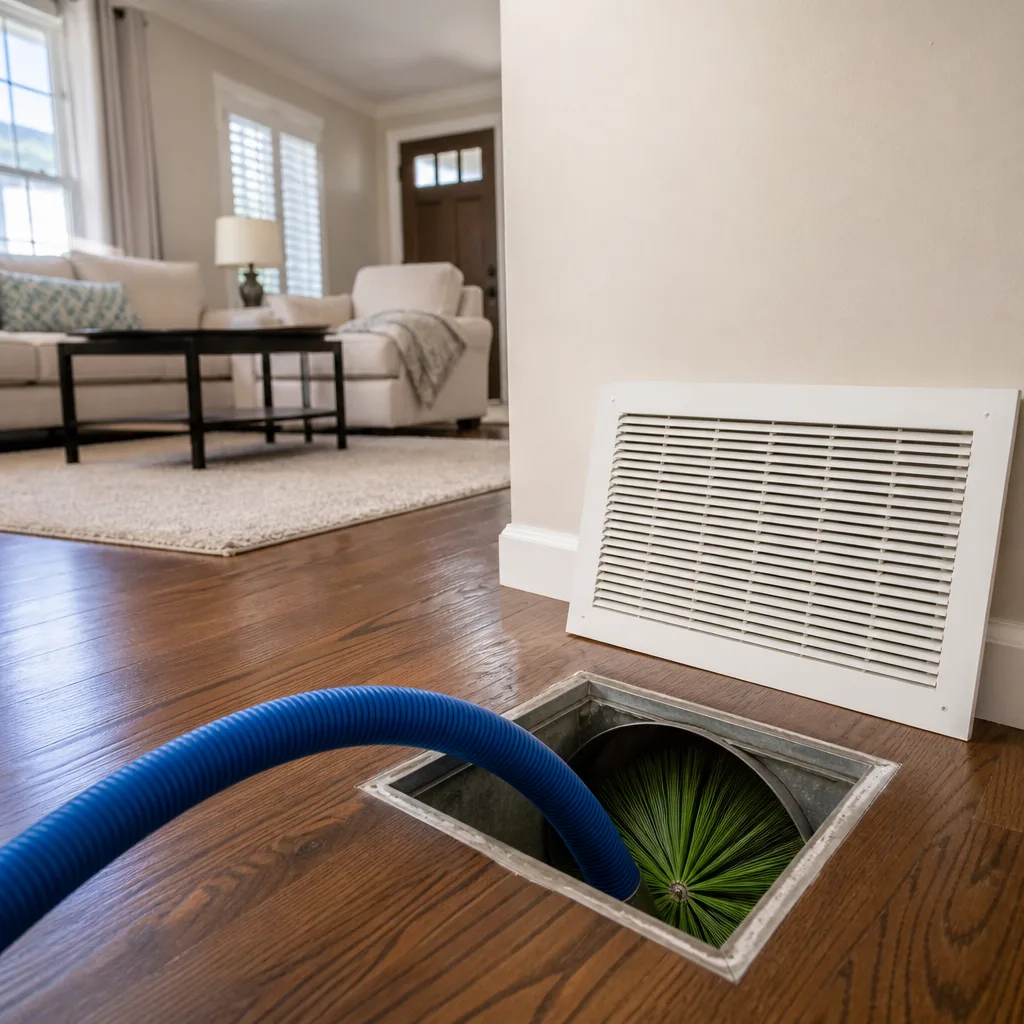 Whole-home duct cleaning
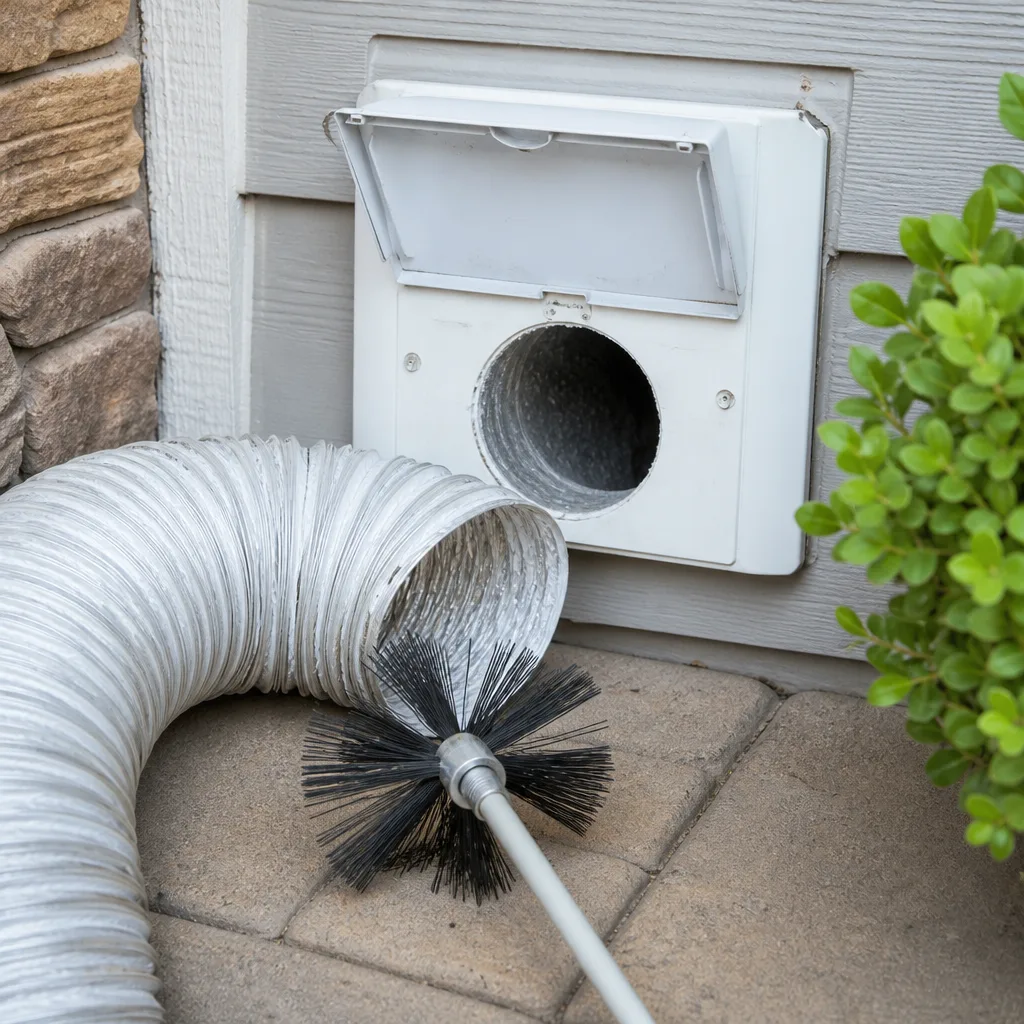 Dryer vent cleaning
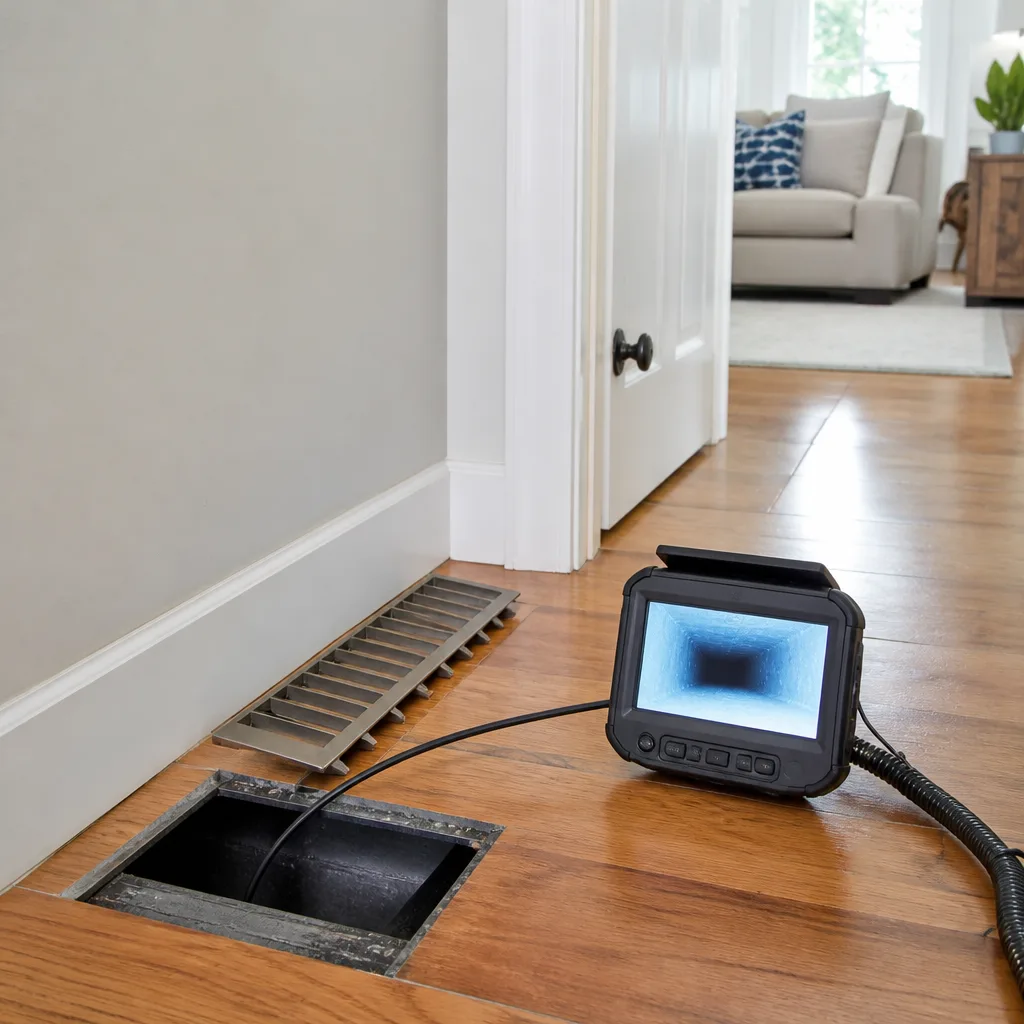 Camera inspection
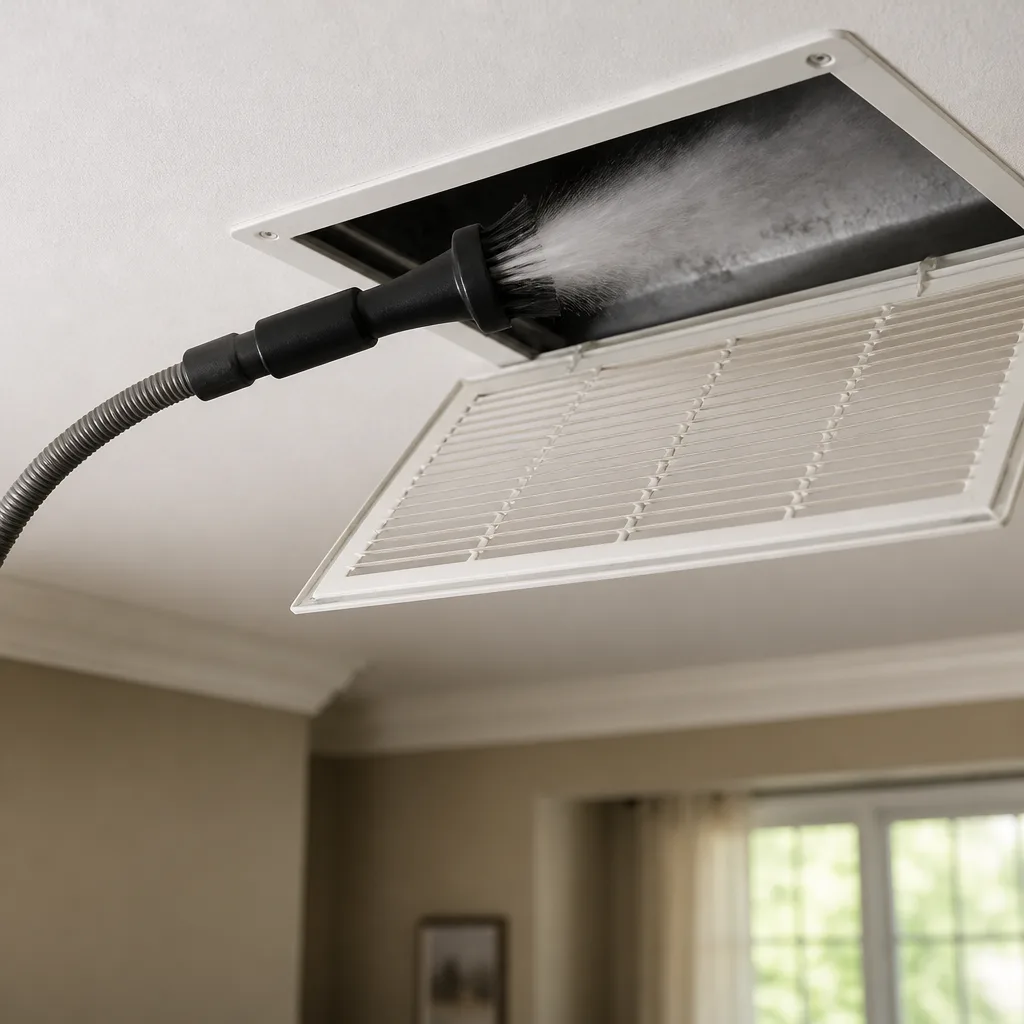 Sanitizing & deodorizing
Whole-system duct and dryer vent check with before-and-after photos - you see exactly what came out of your vents
That "$99 whole-house special" is a bait ad - the real number appears once they are in your hallway, or the "clean" is a shop-vac at the register. We photograph the inside of your ducts before and after instead.
Air Duct Cleaning Maintenance Checklist for Houston Homeowners
Most duct maintenance checklists were written for four-season climates. They tell you to “prepare your HVAC for winter,” which is nearly irrelevant in a city where December afternoons can hit 75°F and the AC clicks back on without warning. Houston doesn’t have a heating season and a cooling season. It has a cooling season that pauses occasionally, a pollen season that stretches from February to November, and a humidity level that never really quits. This guide is a month-by-month action plan built around Houston’s actual weather calendar, because the tasks that matter in February, before the first AC startup, are completely different from the ones that matter in October, after hurricane season finally ends. For more guides & resources on maintaining your Houston home, visit our blog.
Styles & brands we work with
Quick Answer
A practical air duct maintenance checklist for Houston homeowners means changing your filter every 30 to 60 days depending on pets and pollen, doing a visual vent inspection every quarter, scheduling a professional Air Duct Cleaning in Houston every 3 to 5 years, and adding two Houston-specific tasks most checklists miss: inspecting flex duct connections after every major storm and checking for moisture intrusion after heavy rain. The annual rhythm follows Houston’s climate, not a generic winter-prep calendar.
Table of Contents
- The Houston Duct Maintenance Calendar: Month by Month
- How to Do a Visual Inspection at Your Vent Covers
- Filter Change Frequency: Houston Pollen, Pets, and What Actually Works
- The Post-Hurricane and Heavy-Rain Duct Checklist
- Moisture Intrusion in Flex Ducts: The Check Most Homeowners Skip
- Documenting Duct Condition: How to Track Your Baseline Over Time
- Common Mistakes to Avoid
- When to Call a Professional
- Frequently Asked Questions
- The Bottom Line
The Houston Duct Maintenance Calendar: Month by Month
Houston’s climate throws specific challenges at your ductwork in a predictable order. Live oak pollen peaks in March and April. Ragweed surges in September and October. Humidity sits above 70% for months at a time. Hurricane season runs from June 1 to November 30, with the highest storm risk in August and September. Your duct maintenance schedule should follow this rhythm, not the arbitrary seasons printed in a generic checklist.
Here is the month-by-month plan we recommend to homeowners across Houston, from Katy to The Woodlands:
January: The Quiet Month
January is usually the coolest, driest month in Houston. The AC runs less, which means less air moving through the ducts, which means less new dust being pulled in. This is the best month to do a thorough visual inspection of every vent cover in the house. The air has settled, so what you see is what has accumulated over the past several months, not what just got stirred up yesterday. If you see heavy gray accumulation or clumps of pet hair at multiple vents in January, that’s a reliable signal the ducts are overdue for cleaning. January is also a good month to check your bathroom exhaust fan grilles and your return air vents, which tend to collect the most dust during the winter when windows stay closed.
February: Pre-Pollen Filter Change
By mid-February, oak trees in Houston are already producing pollen, even if the worst of it hasn’t arrived yet. Change your HVAC filter in the first week of February, even if it doesn’t look dirty. You want a fresh filter in place before the pollen load ramps up in March. If you have pets, consider moving to a MERV 8 or MERV 11 filter for the pollen season if your system can handle the slightly increased airflow resistance. We recommend checking your filter every two weeks from late February through April, not just every 30 days, because Houston oak pollen can clog a filter in half the usual time. If you see a thick yellow-green coating after two weeks, that’s normal for Houston and it means the filter is doing its job.
March and April: Peak Pollen Vigilance
These are the heaviest pollen months in Houston. Live oak, pine, and hackberry pollen coat everything, including the inside of your return air ducts if the filter isn’t changed often enough. During March and April, check the filter every two weeks. Change it when it looks coated, even if that’s sooner than 30 days. This is also the season when Houston homeowners with allergies notice symptoms flaring indoors, which is often a signal that the duct system itself is holding pollen and redistributing it through the house. A professional cleaning during this window can make a noticeable difference for allergy sufferers, because it removes the pollen reservoir that keeps recirculating even after you change the filter. If you’re unsure whether your ducts have reached this point, our Air Duct Cleaning Warning Signs: A Houston Homeowner’s Reference Guide can help you decide. In our experience, families in areas like Sugar Land and Pearland, where tree canopies are dense, tend to need more frequent attention during these months than homes in more developed parts of the city.
May and June: Pre-Hurricane Season Check
Hurricane season officially starts June 1, but the real preparatory work happens in May. This is the month to check the exterior portions of your duct system that you can access: the outdoor condenser unit for debris accumulation, the area around the air handler if it’s in the attic or a closet, and any visible duct connections. Look for gaps at connection points, signs of pest activity, or sections of flex duct that have sagged or pulled loose. If a storm hits later in the summer, you want to know what the system looked like before, so you can spot changes after. May is also the month to clear leaves and debris from around your outdoor unit, because a storm can turn loose debris into projectiles that damage the unit or force debris into the duct system.
July, August, and September: Storm Response Mode
These are the hottest months in Houston and the peak of hurricane risk. Your AC runs almost constantly, which means maximum air volume moving through the ducts. Any existing debris in the system gets redistributed more aggressively. After any heavy rain or tropical storm event in these months, do a quick check of two things: whether any water stains have appeared on ceilings near vent openings, and whether any vent covers have visible moisture or mold spots. We’ll cover the full post-storm checklist below, but the key habit is to check quickly after the storm, not weeks later. Moisture that sits in a duct system for weeks in Houston’s heat becomes a bigger problem fast. During September, pay extra attention to the filter. Ragweed season is starting and the AC is still running hard, which is a double load on the filter.
October: Post-Hurricane Season Deep Check
By October, hurricane season is winding down and the worst of the summer heat has passed. This is the best month in Houston to schedule professional Air Duct Cleaning services if it’s been three to five years since the last one. Here’s why: the system has just finished months of heavy use, pollen season is a few months away, and any storm-related debris has had time to settle. A cleaning in October resets the system before winter, when Houston homes shift to milder AC use and occasional heat. It also gives you a clean baseline for the next pollen season. If you noticed any moisture issues, pest activity, or unusual dust levels during the summer, October is the month to address them.
November and December: Mild Weather Monitoring
Houston winters are mild, but the system still cycles on. December afternoons can reach the mid-70s, and the AC will run. These months are about maintaining the baseline you established in October. Keep an eye on the filter, but expect less frequent changes unless you have heavy pet shedding. This is also a good time to check that your vent covers are clean and properly seated. If you skipped the October cleaning, November and December are acceptable alternatives, because the pollen load is low and the system is working less hard than in summer. One note specific to Houston: if you use your heater during a cold snap, you may notice a burning dust smell the first time it runs. That’s normally just accumulated dust burning off the heat exchanger or coils, not a duct problem. But if the smell persists beyond a day or two, it’s worth investigating.
How to Do a Visual Inspection at Your Vent Covers
You don’t need any special tools to check the condition of your ducts. A flashlight and a few minutes are enough to spot most problems before they become expensive. The key is knowing what normal looks like versus what signals a cleaning is overdue. Here’s the step-by-step process we recommend for Houston homeowners.
- Turn off the HVAC system at the thermostat. You want the air to be still so dust doesn’t get blown around while you’re looking, and you also don’t want to risk a vent cover falling while the system is running.
- Remove one vent cover in a main living area. Most vent covers pop off with light pressure or unscrew with two screws. Place the cover on a towel so you don’t scratch the floor. This is the same care we take at Mortons Air Duct Houston, using drop cloths under every work area so nothing touches your floors.
- Shine a flashlight into the duct opening. Look at the first few inches of the duct interior. A thin film of fine, light gray dust is normal. This is what accumulates in any duct system and it’s nothing to worry about.
- Look for what shouldn’t be there. Clumps of dark debris, visible mold spots (which look like black or green speckling), pieces of insulation, construction debris, or anything that looks like it came from outside, such as leaves or dirt. Any of these signals that the system needs professional attention.
- Check the vent cover itself. If the return air vents have a thick coating of gray fuzz, that’s a sign the filter hasn’t been catching everything. If supply vents have dust caked around the edges, that’s normal and can be wiped clean with a damp cloth.
- Repeat at a few different vents. Check one vent in a bedroom, one in the living room, and one in a hallway. If the condition is consistent across all of them, you have a reliable picture of the whole system. If one vent is dramatically worse than the others, that may indicate a loose connection or a gap in that specific duct run.
- Take photos with your phone. This is the single most useful habit you can start. Photos create a documented baseline that you can compare against next time and that you can show to any contractor before they start work. We’ll expand on this below.
- Replace the vent covers securely. Make sure each cover seats properly and the screws are snug but not over-tightened. A loose vent cover can rattle when the system runs, which sounds like a mechanical problem when it’s really just a screw.
A quick note on safety: if you’re checking vents in a ceiling, use a sturdy step stool and have someone spot you. Reaching overhead while balancing on furniture is how falls happen, and a fall is never worth a look inside a duct. For anything beyond a visual check, especially anything involving duct interiors deeper than a few inches, a trained professional is the right choice. Duct interiors can be sharp, and disturbing them can release dust and allergens into the living space.
Filter Change Frequency: Houston Pollen, Pets, and What Actually Works
The single most effective thing you can do for your duct system is change the filter regularly. A clean filter catches dust, pollen, pet dander, and debris before it ever enters the ducts. A clogged filter does the opposite: it forces air around the filter media, pulling unfiltered air into the system and coating the duct interiors and the evaporator coil with everything the filter should have caught. In Houston, the challenge is that the filter gets dirty faster than the national average because of the pollen load and the long AC season.
Here are the filter change intervals we recommend for Houston homes:
- No pets, no allergies: every 60 to 90 days. This is the longest interval we suggest in Houston. Even without pets, the pollen load in spring and fall will load a filter faster than 90 days in many parts of the city.
- One pet: every 45 to 60 days. Pet hair and dander dramatically increase filter loading. If you have a dog that sheds heavily, check the filter every two weeks during shedding season, which in Houston is honestly most of the year because there’s no hard winter to trigger a defined shedding period.
- Multiple pets or one pet plus allergies: every 30 to 45 days. This is the most common category we see in Houston households. The combination of pets and pollen means a filter that lasts 90 days in a no-pet home lasts less than half that in a home with a lab and an oak tree in the front yard.
- During peak pollen months of March and April: check every two weeks regardless of category. Houston oak pollen can turn a clean filter into a yellow-green mat in fourteen days. Don’t wait for the 30-day mark if you can see the coating.
- After any major home project: change the filter immediately. Drywall dust, sanding dust, and floor refinishing particles are extremely fine and will coat a filter in a single day. If you’ve had any construction, painting, or flooring work done, change the filter the day the work is finished.
- After any storm event that forced debris into the home: check and likely change. If water, leaves, or wind-driven debris entered the home or the HVAC system during a storm, the filter has been working overtime. Change it as part of your post-storm response.
One clarification that matters: a more restrictive filter is not automatically better. High-MERV filters catch more particles, but they also restrict airflow, which forces your AC to work harder and can freeze the evaporator coil in Houston’s humid conditions. For most Houston homes, a MERV 8 filter is the sweet spot. If someone in the home has significant allergies, a MERV 11 can help, but we recommend confirming with an HVAC professional that your system can handle the added airflow resistance. A filter that’s too restrictive will cost you more in energy and repair bills than it saves in cleaner air.
The Post-Hurricane and Heavy-Rain Duct Checklist
Houston’s storm season is a fact of life. Hurricanes, tropical storms, and the heavy rain events that come with them create specific risks for duct systems that most maintenance checklists never mention. The most common issue we see in Houston after a major storm is not catastrophic flooding, but slow moisture intrusion at duct connections that goes unnoticed for months. Here is the checklist to run after any significant storm or heavy rain event.
- Check ceilings around every vent opening for water stains. Water that enters the attic or wall cavities during a storm often shows up first as a ring or discoloration around vent openings. Check every room, not just the ones you use most. Stains that are small and dry may be old; stains that are growing or feel damp to the touch need immediate attention.
- Open the attic access and look at the visible ductwork. Bring a flashlight. Look at the flex duct runs that connect to the supply vents. Check for sagging, pulled connections, or visible moisture on the duct exterior. If any duct is resting on attic insulation that looks damp, that’s a moisture problem that needs professional attention.
- Smell the air coming from the vents for musty odor after the AC has been off for a few hours. After a storm, Houston’s humidity spikes. A musty smell at the vents may be nothing more than high ambient humidity, or it may indicate moisture inside the duct system. If the smell persists for more than a day or two after the AC runs continuously, have the system inspected.
- Check the return air vents for signs of water. Return vents are the openings that pull air into the system. If water entered the home during a storm, it often pools near low return vents. Check for water stains on the wall or floor around these openings.
- Look at the outdoor unit for debris damage. After high winds, the outdoor condenser unit may be covered in leaves, branches, or other debris. Clear the area around the unit and check for dents or other visible damage. Debris accumulation on the condenser reduces airflow and forces the system to work harder.
- Change the filter within a week of the storm. Even if the filter wasn’t due, storm events put extra load on the system. If water or excess humidity entered the home, the filter has been pulling moisture and debris. A fresh filter is cheap insurance.
- Check flex duct connections for moisture intrusion. This is the item most homeowners skip, so we’ve dedicated the next section to it.
If you find water, mold, or significant debris in the system after a storm, don’t attempt to clean it yourself. Wet insulation inside ducts in Houston’s heat is a mold risk, and mold in ductwork requires professional remediation, not a DIY wipe-down. Morton’s Air Duct Houston has seen the full range of post-storm duct damage across Houston, from minor debris infiltration to full water intrusion, and the homes that recover fastest are the ones that respond within days, not weeks. For details on regulatory requirements, see Air Duct Cleaning Permits, Codes & Inspections in TX: What You Need to Know.
Moisture Intrusion in Flex Ducts: The Check Most Homeowners Skip
Flex duct, also called flexible duct or flex duct, is the insulated, flexible tubing that connects the main trunk line of your HVAC system to the individual vent openings throughout the house. Most Houston homes built in the last thirty years use flex duct extensively in the attic. It’s effective and affordable, but it has a specific vulnerability: the connections where flex duct attaches to the vents and the main trunk are sealed with tape or mastic, and those seals deteriorate over time. In Houston’s attic heat, that deterioration happens faster than in cooler climates. When a seal fails, warm, humid attic air infiltrates the duct system, and during heavy rain, moisture can enter directly at the connection point.
Here is how to check for moisture intrusion at flex duct connections after a heavy rain event:
- Access the attic during daylight hours and bring a flashlight. Attics in Houston are hot from April through October, so do this early in the morning or on a cloudy day. If the attic is dangerously hot, wait. Heat exhaustion in an attic is a real risk in Houston summers, and no maintenance check is worth that.
- Look at the point where each flex duct meets the vent opening. The connection is typically a metal collar that passes through the ceiling. The flex duct slides over this collar and is secured with a metal band or zip tie. Look for signs that the duct has pulled away from the collar, that the securing band has loosened, or that the tape or mastic seal has cracked.
- Feel the outer jacket of the flex duct near the connection. The outer jacket is the foil-faced insulation wrap. If it feels damp, that moisture has come from somewhere. If the inner core of the duct, the plastic or metal sleeve inside the insulation, is visible or appears wet, that’s a direct pathway for attic air and moisture into the system.
- Check for condensation on the outside of the duct. In Houston’s humid summers, condensation on the outside of flex duct is common, especially in poorly ventilated attics. But if the condensation is concentrated at connection points or is dripping, that’s a sign the connection seal has failed and cold air is escaping, causing localized condensation.
- Look for water stains on the attic insulation below the duct connections. Water that enters the duct at a failed connection will often drip onto the insulation below. A series of small stains in a line along the duct run is a classic signature of seal failure.
- If you find any of these signs, schedule a professional inspection. Moisture in the duct system in Houston leads to mold growth quickly, and mold remediation is far more involved than a simple re-seal. The connection can usually be repaired by re-securing the duct and applying new mastic or tape, but the moisture source needs to be addressed first, and that requires finding whether the moisture came from outside weather, from condensation caused by air leakage, or from a roof leak.
We mention moisture intrusion specifically because it’s the most under-diagnosed duct problem in Houston. Homeowners associate duct cleaning with dust and hair, but moisture is the issue that actually threatens the system’s integrity. In our experience, a large share of the homes we visit in older Houston neighborhoods like Meyerland and Braeswood have at least one flex duct connection that has deteriorated to some degree. The fix is usually simple when caught early and expensive when ignored.
Documenting Duct Condition: How to Track Your Baseline Over Time
One of the most useful habits we encourage Houston homeowners to adopt is simple and free: take photos of your ducts and vents on a regular schedule, store them somewhere organized, and use them as a baseline. This practice protects you in two ways. First, it helps you spot changes over time that signal developing problems. Second, it gives you evidence when you work with a contractor, so you can see exactly what changed and avoid paying for work that was already done. Here’s how to build a useful documentation system.
What to document: Photograph the interior of at least three supply vents and one return vent per year. Shoot from the same angle each time so the photos are comparable. Also photograph the filter before you replace it, the visible ductwork in the attic if you have access, and the outdoor condenser unit from a couple of angles.
When to document: At minimum, once per year in a consistent month. We recommend January for this, since it’s the quiet month when the system has been running in mild conditions and what you see is the true accumulation state. If you do a major event like a professional cleaning or a storm response, document before and after.
How to store it: Create a folder in your phone’s photo app or a cloud drive called “HVAC Maintenance” with subfolders by year. If you’re more organized, a simple note with the date, the filter type installed, and any observations, combined with the photos, creates a complete service record.
How to use it: When a contractor tells you the ducts need cleaning, ask them to show you exactly what they’re seeing. Compare the current state to your most recent baseline photos. If the system looks substantially the same as it did six months ago and the contractor is recommending a $600 cleaning, you now have the evidence to ask targeted questions. This isn’t about distrust; it’s about being an informed homeowner. A reputable professional will welcome your records and use them to make a more accurate recommendation. We encourage this practice at Mortons Air Duct Houston because it aligns with the way we already work: we show homeowners exactly what we’re doing and why, and we provide a written price before any work starts.
Documentation also matters after a professional cleaning. A quality cleaning should leave visible results at the vent openings. Photograph the vents immediately after the cleaning, and that becomes your post-service baseline. If a different company services the system three years later, you’ll be able to show them exactly what condition the system was in when it was last cleaned, which helps them give you an honest assessment.
Common Mistakes to Avoid
- Treating the filter as a set-and-forget item. Houston pollen and pet dander load filters faster than in most of the country. A filter that runs 90 days in Houston is often heavily clogged by day 60, which forces the system to work harder and pushes unfiltered air around the filter media. Set a recurring reminder in your phone.
- Assuming a dirty vent cover means dirty ducts. Vent covers collect dust on their outer surface from normal room air circulation. A dusty cover is a housekeeping issue. The duct interior is what matters, and that requires looking inside, not just at the cover.
- Checking ducts only after a flood. Houston’s heavy rain events can cause moisture intrusion even when the home never floods. High humidity alone can cause condensation inside poorly sealed ducts. Regular inspections catch small issues before they become mold problems.
- Using the wrong filter for your system. A high-MERV filter that’s too restrictive for your system can freeze the evaporator coil and damage the compressor over time. Most Houston homes are fine with MERV 8 unless there’s a documented allergy need and a system that can handle MERV 11.
- Ignoring post-storm checks because the house “looks fine.” Water and moisture problems in attic ductwork are invisible from the living room. The first sign of duct moisture damage is often a musty smell or a ceiling stain that appears weeks after the storm. Running the post-storm checklist takes twenty minutes and can save thousands.
- Waiting for a problem to appear before documenting your system. Homeowners who only start paying attention to their ducts after something goes wrong have no baseline to compare against. Start documenting now, not after the first problem. The photos you take in a calm January are the reference point you’ll need in a chaotic September.
- Assuming every company offers the same level of care. Not all duct cleaning services are equal. Some use entry-level equipment, skip the documentation, and leave a mess. When you choose a company, look for one that provides a written price before work starts, protects your floors with shoe covers and drop cloths, and shows you photographic proof of the work. These are the standards we work to on every job through the Cedarwell Care Promise.
When to Call a Professional
A DIY visual inspection is useful, but it has clear limits. Some conditions require professional equipment and training. Call a professional if you see mold growth inside the duct or at the vent openings, if you find water or moisture in the duct system, if the ducts show heavy debris accumulation beyond a thin dust film, if you smell persistent musty or burning odors that don’t resolve after a day of normal operation, if you’ve had a pest problem in the attic that may have contaminated the ducts, or if it’s been more than five years since the last professional cleaning. You should also call before you buy a home, since a pre-purchase duct inspection can reveal problems the standard home inspection misses. Mortons Air Duct Houston home offers free estimates across Houston, and every job includes a written price before any work starts. Call (940) 314-5008 to schedule.
Frequently Asked Questions
Every 3 to 5 years is the right interval for most Houston homes, with the shorter end for households with multiple pets, allergy sufferers, or homes that have been through construction or storm damage. Houston’s long pollen season and high humidity mean ducts accumulate contaminants faster than the national average, so if it’s been more than five years and you can’t remember the last cleaning, it’s time. Call (940) 314-5008 for a free estimate and we’ll help you determine whether a cleaning is needed based on what we see in your system.
Air duct cleaning in Houston typically costs $350 to $650 for a whole-home system, depending on the size of the home and the condition of the ducts. Morton’s Air Duct Houston provides a written price before any work starts, so the number we quote is the number you pay. Call (940) 314-5008 for an exact quote for your home.
Cheaper quotes often come from companies using entry-level equipment, rushing through the job, or quoting a low base price that grows once the crew arrives with add-ons for each vent, each return, or each service component. Morton’s Air Duct Houston gives one written price per system, agreed before we start, with no per-vent upselling. The price on the quote is the price on the invoice.
Ask for before-and-after photos of your actual duct interiors. A reputable company will show you what the ducts looked like when they started and what they looked like when they finished. Morton’s Air Duct Houston documents every job and provides a photo of the clean-up before the crew leaves, so you can see exactly what was done. Call (940) 314-5008 to ask about our process.
Yes. Houston’s persistent humidity, especially from May through September, affects duct interiors by causing dust to adhere more readily, accelerating the breakdown of duct seals, and increasing the risk of mold if moisture enters the system. Homes in drier climates can often go five years or more between cleanings; Houston homes benefit from the shorter end of the 3 to 5 year range.
After. Scheduling your duct cleaning in October or early November means the system has finished the heavy summer workload and any storm-related debris has settled where it can be removed. It also resets the system to a clean state before the next pollen season begins in February. If a major storm causes specific damage, of course, don’t wait; address that immediately. But for routine cleanings, post-hurricane season is the sweet spot in Houston.
The Bottom Line
A useful air duct maintenance checklist for Houston is built around the city’s actual climate: change filters more often in spring pollen season, check connections after every major storm, document your baseline in January, and schedule professional cleanings in October after the summer load has passed. The tools are simple: a flashlight, a phone camera, and a calendar reminder. The payoff is a duct system that runs efficiently, a home that smells clean, and a maintenance record that prevents surprise invoices from becoming blind acceptance. When it’s time for a professional cleaning, the standard matters: written pricing before work starts, drop cloths and shoe covers inside the house, quality equipment from brands like Rotobrush and Nikro, and a 365-Day Done Right Promise that means the job gets done right or we make it right. That’s the standard we work to at Dryer Vent Cleaning in Houston and every other service we provide. Call (940) 314-5008 for a free estimate, and we’ll help you build the right maintenance plan for your Houston home.
Written by Paul Adeyemi, Owner at Mortons Air Duct Houston, serving Houston since 2005.
See the difference
 Before
 After
After Before
 After
After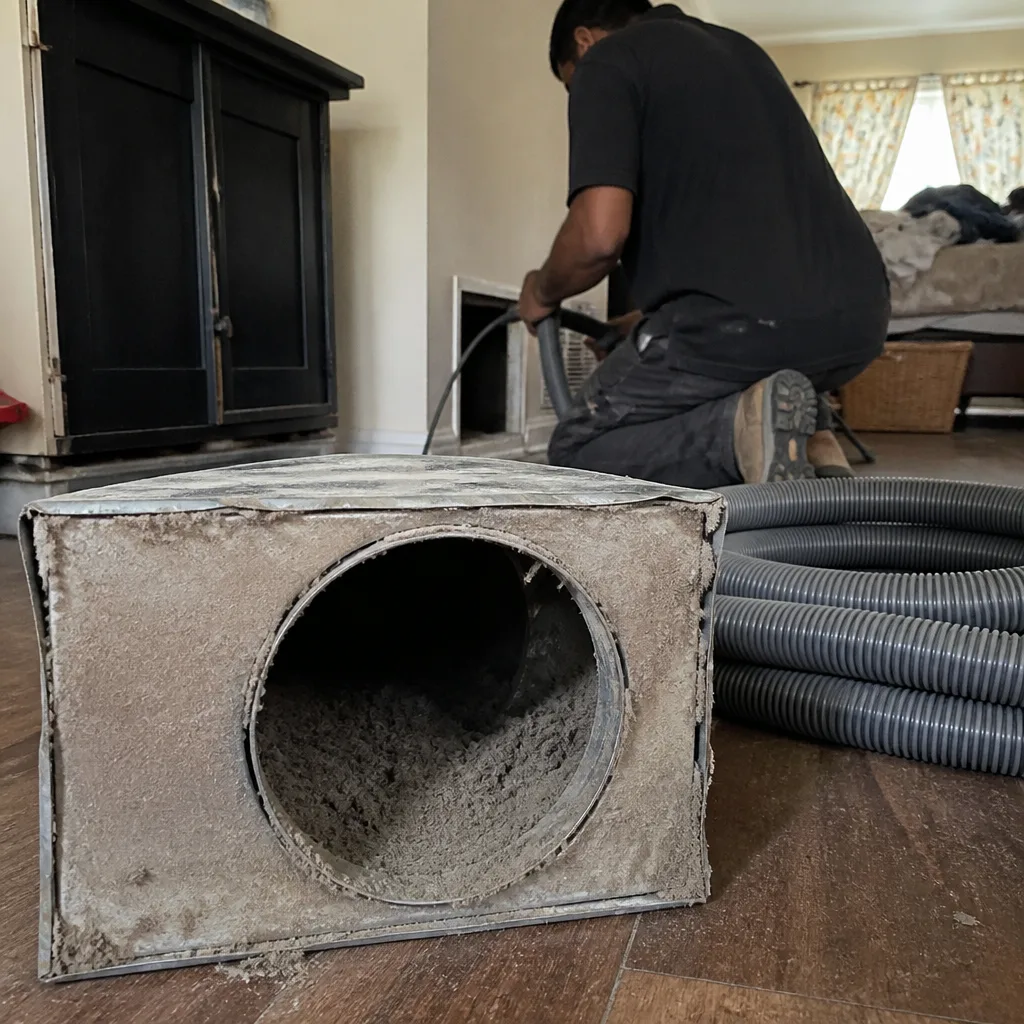 Before
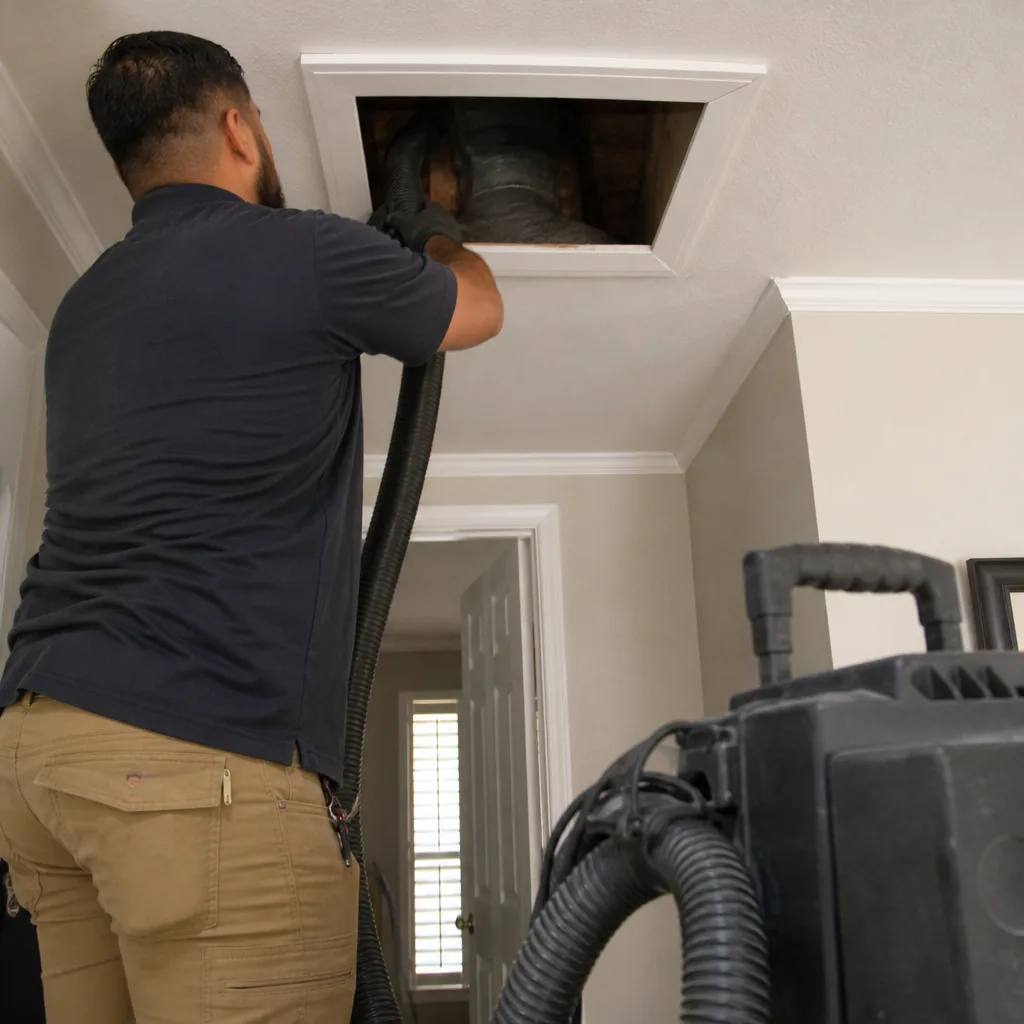 After
After