
Last updated October 15, 2026
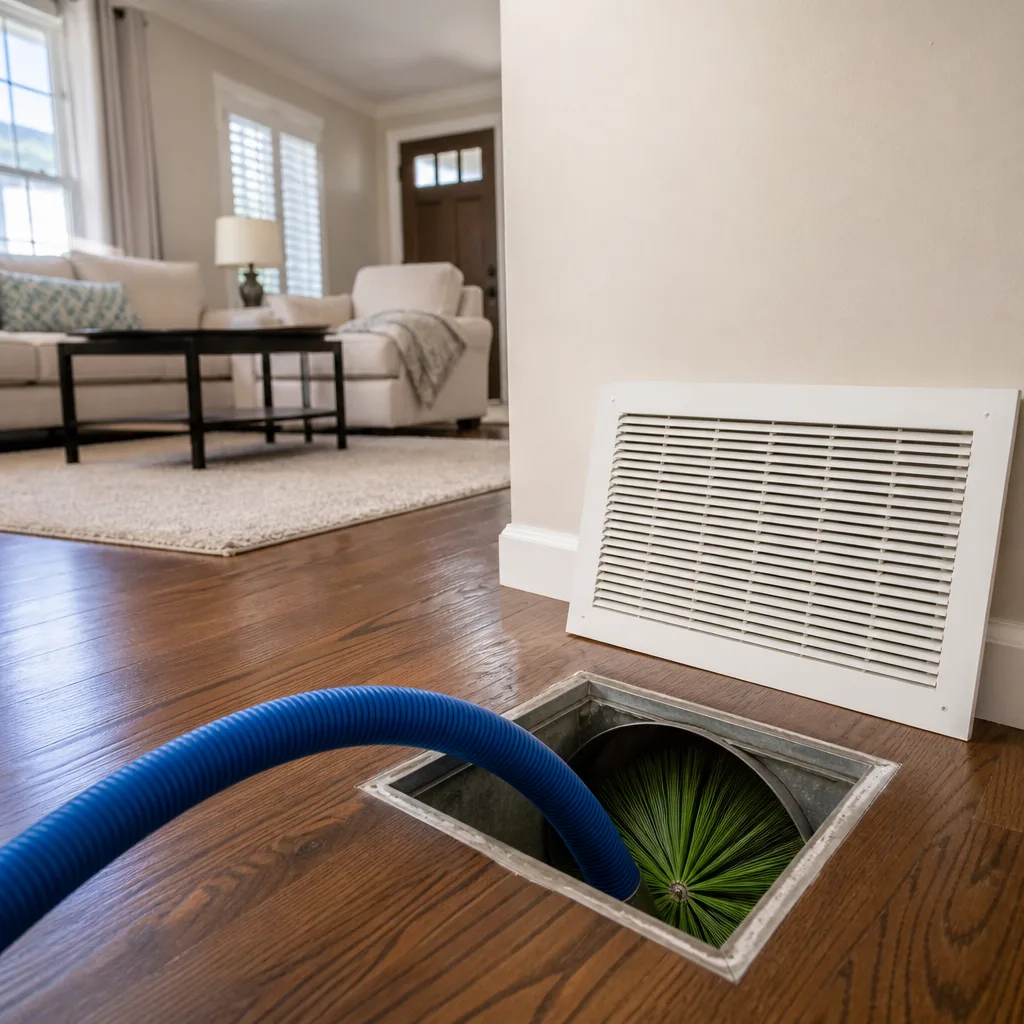 Whole-home duct cleaning
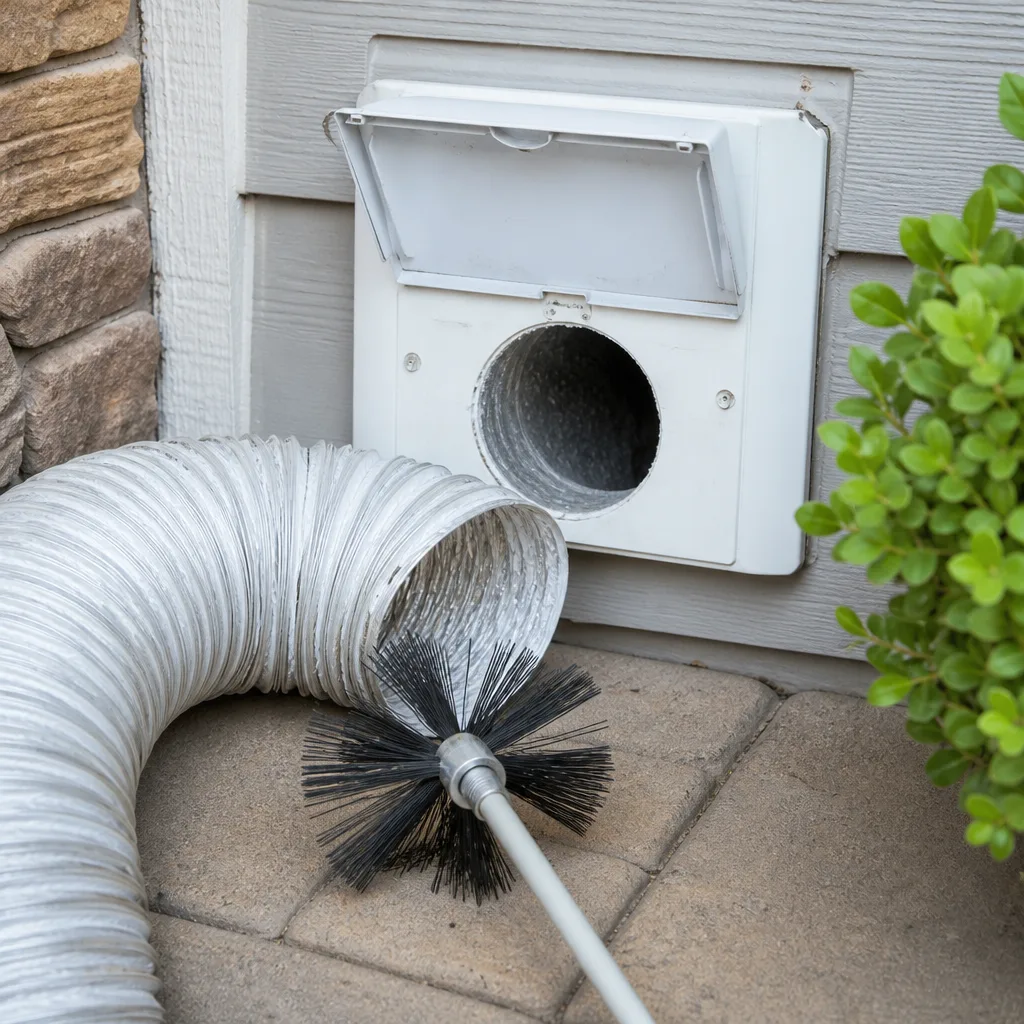 Dryer vent cleaning
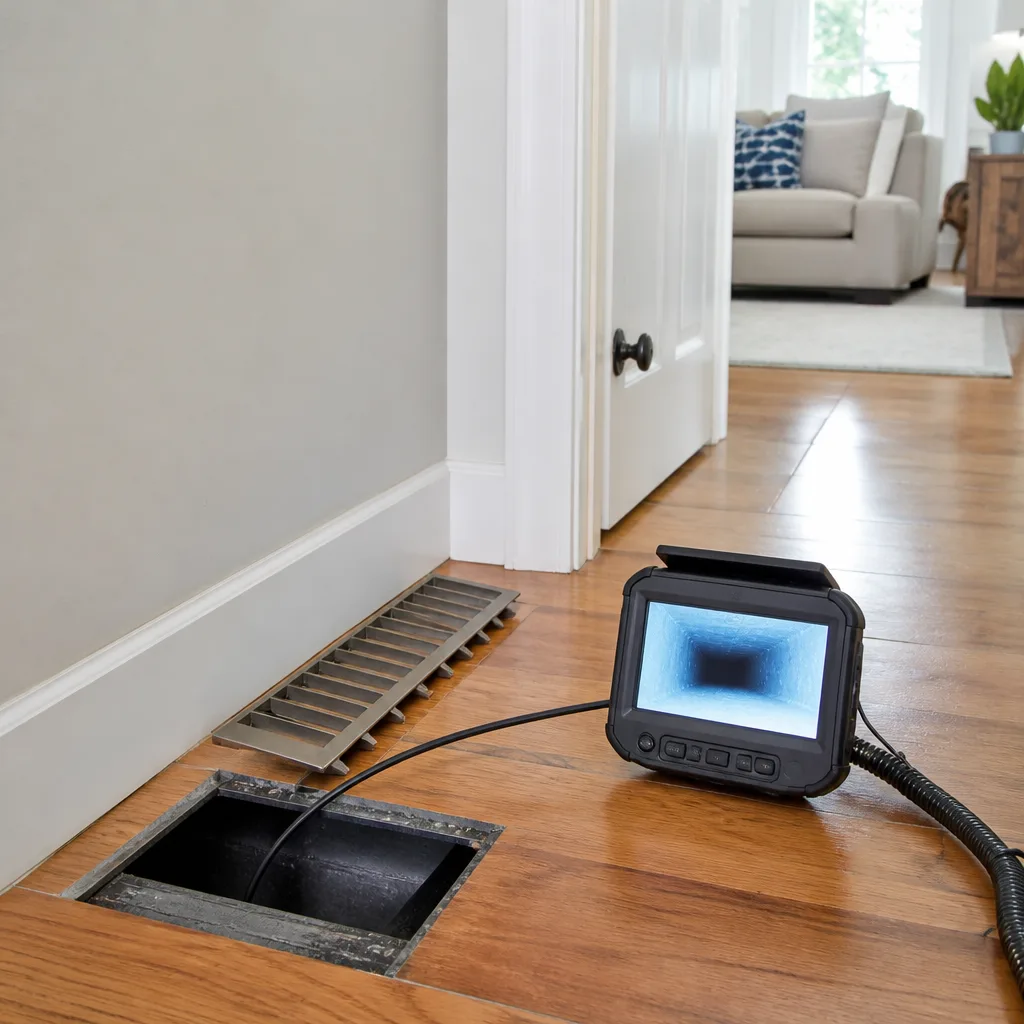 Camera inspection
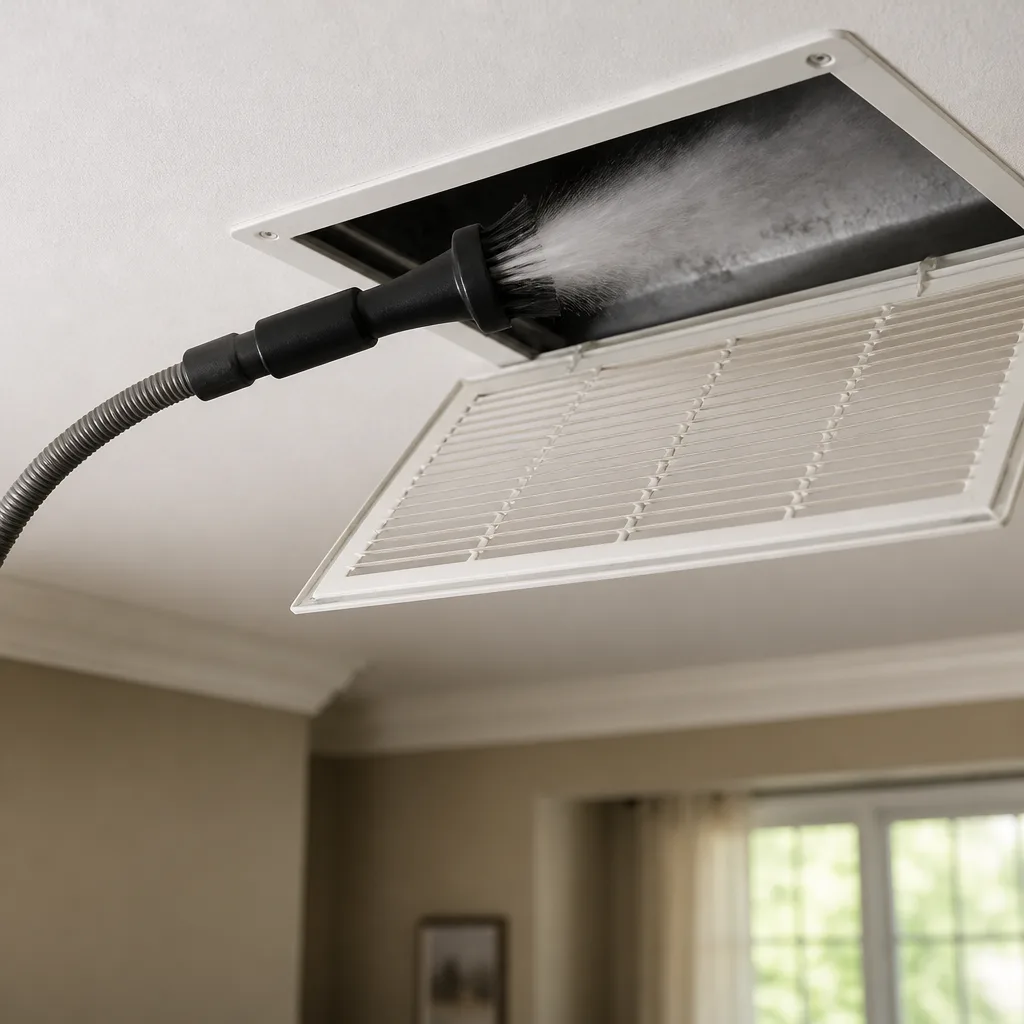 Sanitizing & deodorizing
Whole-system duct and dryer vent check with before-and-after photos - you see exactly what came out of your vents
That "$99 whole-house special" is a bait ad - the real number appears once they are in your hallway, or the "clean" is a shop-vac at the register. We photograph the inside of your ducts before and after instead.
DIY vs Professional Air Duct Cleaning: The Houston Homeowner’s Decision Guide
Here’s a statistic that should reframe how you think about duct cleaning: most of what you can see in your vents represents less than ten percent of the total interior surface area of your duct system. A Houston homeowner with a 2-year-old home, no pets, and clean filter logs who wants to vacuum their vent covers is doing something reasonable. A homeowner with a 1970s home, two dogs, and visible debris in the return grille who reaches for a shop vac is about to push contamination deeper into their ductwork. Our How to Hire a Air Duct Cleaning Contractor in Houston: A Step-by-Step Guide can help if you decide to go pro, and this guide gives you an honest framework for figuring out which situation you’re actually in, before you spend money or make the problem worse.
Quick Answer
DIY air duct cleaning is genuinely appropriate for light surface maintenance in newer Houston homes with clean filter history, no pets, and no recent renovation. Professional Air Duct Cleaning is worth the cost when you have older flex-duct systems, visible mold indicators, post-renovation debris, rodent intrusion history, or systems that haven’t been cleaned in over a decade. The honest answer for most Houston homeowners: DIY handles the first 12 to 18 inches of accessible duct, and professional negative-pressure equipment is required for everything beyond that.
Styles & brands we work with
Table of Contents
- What DIY Can Actually Accomplish
- The Houston Climate Factor: Humidity, Mold, and Your Ducts
- Why Older Flex-Duct Houston Systems Are a DIY Danger Zone
- The Honest Cost Comparison: DIY vs Professional
- The Three-Question Self-Assessment
- When DIY Is Fine (And When It Isn’t)
- What Professional Equipment Actually Does Differently
- How to Verify the Work Was Actually Done
What DIY Can Actually Accomplish
Let’s be clear about what a homeowner with a shop vac, a brush kit from a hardware store, and a free Saturday can realistically achieve. You can clean vent covers and register grilles thoroughly. You can vacuum the first 12 to 18 inches of accessible ductwork from each opening. You can wipe down return air grilles that collect the most visible dust and pet hair. These are genuinely useful tasks, and in a newer Houston home with a properly maintained filtration system, this light surface work may be all you need for several years.
However, the average Houston duct system runs 30 to 60 feet per trunk line with multiple branch runs. That means the accessible portion of your ducts represents maybe five percent of the total interior surface. The dust you see at the register is the dust that made it all the way through the system. The heavier accumulation sits deeper, where your shop vac’s suction simply cannot reach with enough force to dislodge anything. In our experience across Houston neighborhoods from Katy to Clear Lake, the visible register dust is almost never the whole story.
The Houston Climate Factor: Humidity, Mold, and Your Ducts
Houston’s climate creates specific duct conditions that homeowners in drier cities never face. Our summers run from May through September with 90-plus percent humidity, and your air conditioning runs continuously for months. That means condensation inside ductwork is a year-round reality, not an occasional nuisance. Organic material that accumulates in ducts, like skin cells, pet dander, and pollen that works its way in from outdoor air, becomes damp inside the system. Damp organic material in a dark duct is exactly the environment where mold and bacteria grow.
This is the single biggest reason the “just vacuum what you can see” approach falls short in Houston. Surface cleaning addresses dry dust. Houston ducts hold moisture-bound contamination. If you notice a musty smell when the AC first kicks on, or visible dark spotting around register openings, you’re almost certainly dealing with moisture-related growth inside the ductwork. That requires professional-grade negative-pressure equipment and appropriate antimicrobial treatment, not a brush attachment. The Air Duct Cleaning in Houston guide goes deeper into how our climate affects system performance.
Why Older Flex-Duct Houston Systems Are a DIY Danger Zone
Houston homes built before the mid-2000s commonly use flexible ductwork, or flex duct, for branch runs off the main trunk line. Flex duct is a wire coil wrapped in insulation and an outer vapor barrier. It works well when installed properly, but it ages. The inner liner becomes brittle over time under Houston heat, especially in attics that routinely hit 130 degrees during summer afternoons. The connections at each end, where flex duct meets the supply box or register boot, can loosen as the duct settles.
Here’s what too many DIYers discover the hard way: pushing a rotating brush or forcing a shop vac hose deeper into flex duct can dislodge these aging connections. The duct separates from the boot, and now your conditioned air is blowing directly into the attic instead of into your living room. You’ve turned a maintenance task into a repair call that costs more than the professional cleaning would have in the first place. Puncturing the inner liner creates another path for attic dust and insulation to enter your airstream. In older Houston systems, the ductwork is often more fragile than the homeowner realizes.
If your home has exposed flex duct in the attic, and you are not certain of its age and condition, the safer move is to leave the interior cleaning to a professional who can inspect connections before applying negative pressure to the system. This is standard practice for our technicians on every Mortons Air Duct Houston home service visit, precisely because we know what aging Houston duct systems look like.
The Honest Cost Comparison: DIY vs Professional
Let’s put real numbers on the table. A decent DIY duct cleaning attempt costs roughly:
- Shop vac with extension hose: $45 to $90 if you don’t already own one
- Brush kit with flexible rods: $25 to $60
- Vent register replacements (optional): $8 to $15 each
- Your time: 3 to 5 hours for a thorough attempt at a whole-house surface clean
- Total DIY cost: roughly $70 to $250 depending on what you already own
A professional air duct cleaning in Houston typically runs $450 to $800 for a full system, depending on home size, number of systems, and contamination level. That’s the honest range. What you’re buying is the difference between cleaning the first 18 inches and cleaning the entire system under negative pressure with a truck-mounted or high-powered portable unit.
The question is not whether $500 is more than $100. It obviously is. The question is what each approach accomplishes. If your situation genuinely only calls for surface cleaning, the DIY route saves you real money. If your ducts need a deep clean, the DIY attempt costs you $100 and leaves the actual problem untouched, which means you eventually pay for the professional service anyway. Paying twice is more expensive than paying once.
One thing to know about how Morton’s prices this: you get a written price before any work starts, and that price is based on the specific system in your home, not a per-vent upsell structure. No surprises on the invoice. That flat-rate approach matters when you’re comparing costs, because it means the number you hear on the phone is the number you pay.
The Three-Question Self-Assessment
Answer these three questions honestly, and you’ll know which side of the DIY/professional line you’re on.
- How old is your home and duct system? If your home was built in the last 5 to 7 years and you’ve changed filters regularly, your ducts are unlikely to have significant accumulation. If your home is 15-plus years old, especially in Houston’s humidity, you’re working against years of moisture-bound buildup.
- What’s your household profile? Pets, kids, and Houston’s pollen seasons all add material to your airstream. Two dogs shedding into a 1970s ranch in Spring Branch creates a fundamentally different duct situation than a pet-free townhome in Midtown built in 2020.
- What’s happened in the home recently? Renovation, water intrusion, rodent activity, or a mold issue anywhere in the home changes your DIY calculus immediately. These events deposit material deep in the duct system that no surface cleaning addresses.
DIY is reasonably fine if: you answered “newer home,” “no pets or one hypoallergenic breed,” and “no recent events.” Clean your register covers, vacuum what you can reach, change your filter, and move on with your weekend.
Call a professional if: you answered “15-plus years old,” “pets,” or “renovation, water, or rodents.” The contamination you cannot see is the contamination that matters, and Houston’s humidity has been working against you the entire time.
When DIY Is Fine (And When It Isn’t)
Some Houston homeowners come to us after trying DIY and finding it didn’t solve their problem. Others call before trying anything, wanting to know if DIY is even worth attempting. Here’s our honest guidance based on what we see in Houston attics and return plenums every week.
DIY surface cleaning is genuinely adequate when:
- Your home is under 7 years old and has consistent filter change records
- You have no pets or your pets are short-haired with minimal shedding
- No renovation work has occurred since the home was built
- You can see clearly into the first few inches of duct from each register and it looks clean
- No one in the home has unexplained respiratory irritation or allergy symptoms
Professional cleaning is not optional when:
- Your home has been renovated in the years since the ducts were installed (drywall dust, sawdust, and paint overspray work deep into the system)
- You can see dark staining or moisture marks around register openings
- You’ve had rodents anywhere in the home (droppings in ducts are a health issue, full stop)
- Your system hasn’t been cleaned in 10 or more years
- Allergy symptoms worsen at home and improve away from home
The renovation scenario deserves special attention for Houston homeowners. We see it constantly in neighborhoods like The Heights and Montrose, where older homes undergo near-constant remodeling. Drywall dust is fine enough to travel through the entire duct system and settle everywhere. It’s abrasive to HVAC components and it clings to duct walls. No amount of register vacuuming addresses it, because the dust is everywhere, not just at the openings. If you’ve renovated and never had the ducts cleaned afterward, that’s a clear professional-job situation.
What Professional Equipment Actually Does Differently
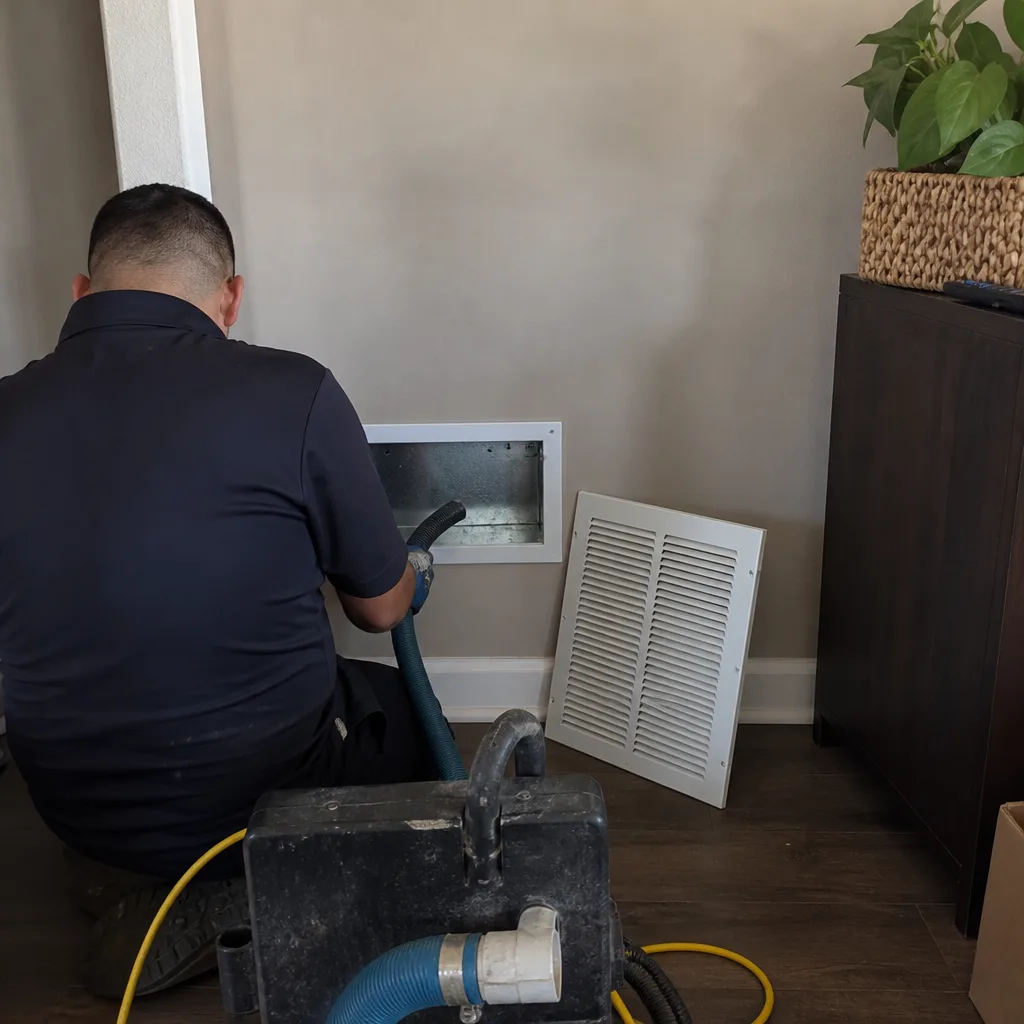
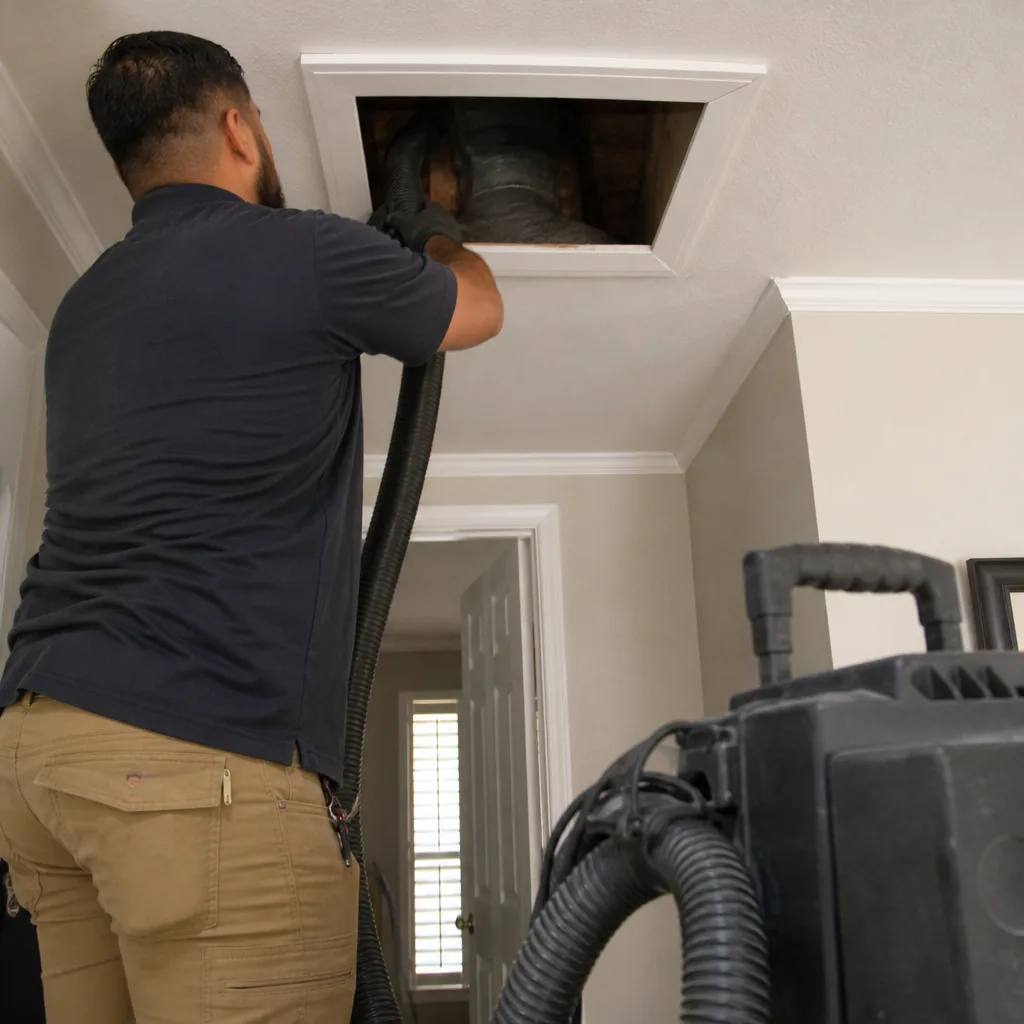
The core difference between DIY and professional duct cleaning is negative pressure. A shop vac creates strong suction at the opening. Professional systems from brands like Rotobrush and Nikro create negative pressure across the entire duct system, which means every branch run experiences airflow pulling toward a central collection point while agitation tools dislodge debris from the duct walls.
This matters physically for a simple reason: in a DIY setup, the air you’re pushing with the brush is carrying dislodged particles deeper into the system where the shop vac isn’t. In a professional negative-pressure setup, everything moves toward the vacuum source. The system is sealed at each register and at the plenum, the machine pulls air through the entire duct network, and debris cannot migrate the wrong direction. This is what “cleaning the whole system” actually means.
The agitation tools differ too. Professional rotary brushes and air whips reach the full length of branch runs and trunk lines. They’re matched to the duct dimensions so they contact the walls without damaging older flex duct. We run equipment from Guardsman and Rotobrush specifically because these units are built for the kind of varied duct systems we see across Houston, from older ranch-style homes in Pasadena to newer construction in Sugar Land. The tool matters less than the technique, but the technique requires the right negative-pressure equipment to begin with.
How to Verify the Work Was Actually Done
This is one of the most common questions we hear, and it points to a real problem in the industry. Duct cleaning has a reputation, earned or not, for being the kind of service where you can’t tell if anything happened. Your ducts are out of sight, so the whole value proposition is hidden from view. The reasonable homeowner’s question is: how do I know?
Here’s what verification should look like. Any legitimate professional should offer before-and-after photos of the duct interior taken from the access points. Modern inspection cameras make this simple, and a company that won’t show you photos of what was in your ducts before and what they look like after is not a company you want in your attic. The photos don’t need to be art. They need to show the duct walls.
A second verification layer: the collection canister. When negative-pressure cleaning runs properly, the material removed from your ducts ends up in a container you can see. After a cleaning on a typical 2,000-square-foot Houston home with a few years of accumulation, the canister holds a surprising amount of dust, hair, and debris. If the canister is empty after a “full cleaning,” ask questions.
We take this a step further at every job with a photo of the clean-up before the crew leaves. You can see the floors and surroundings exactly as we found them. That’s part of the Cedarwell Care Promise, and it’s not a bonus feature. It’s the baseline standard. If a company can’t show you what they did inside the ducts and what the area looked like when they finished, they haven’t proven the work was done at all.
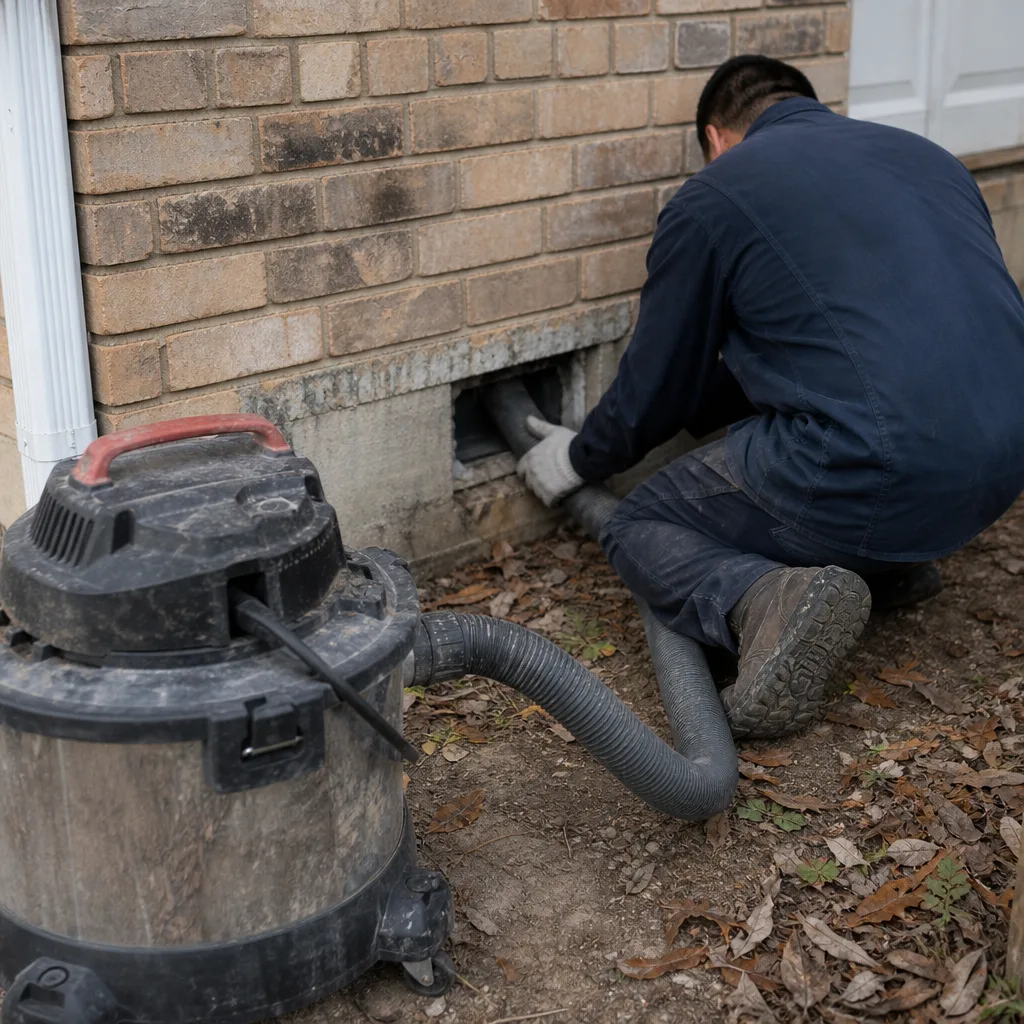
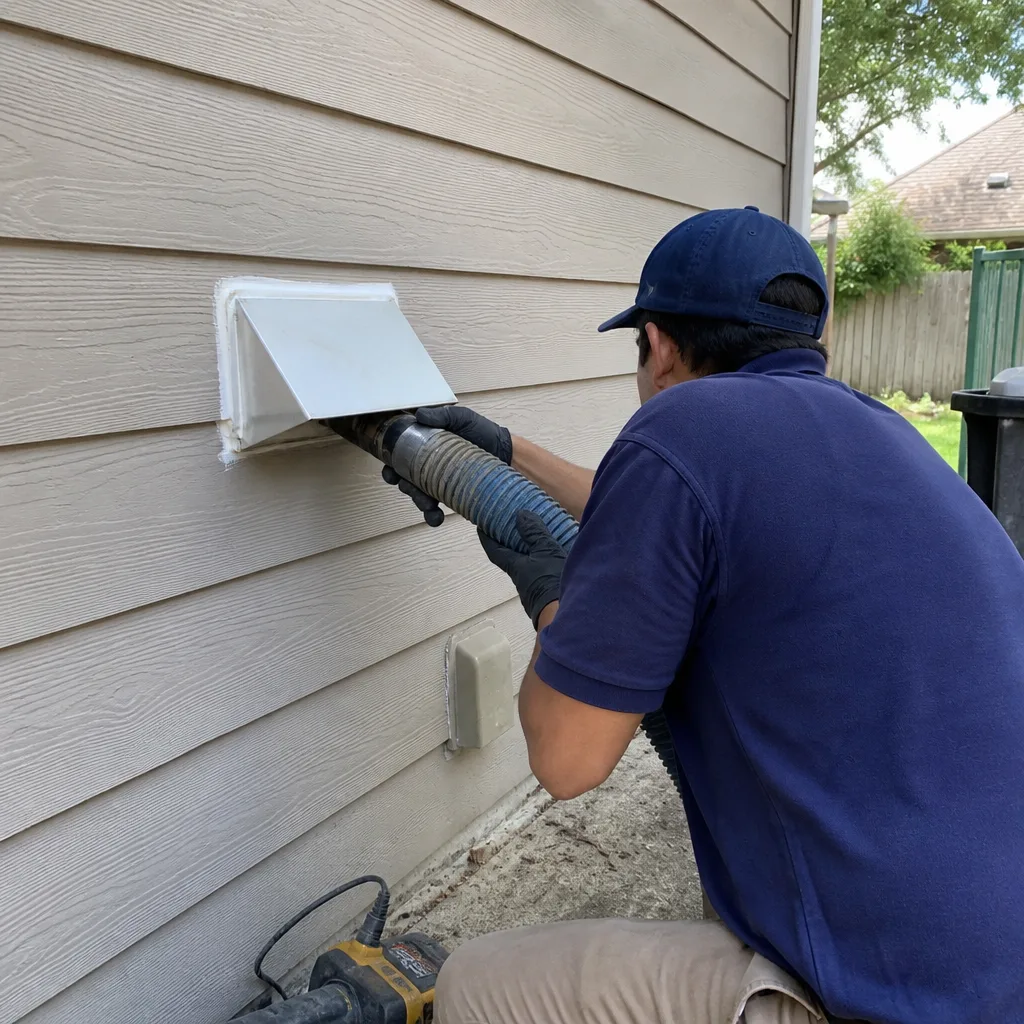
This verification principle is also relevant to the Dryer Vent Cleaning in Houston process, where the entire vent run is photographable from both ends. The same standard applies: if they can’t show it, they didn’t do it.
Common Mistakes to Avoid
- Assuming visible dust means dirty ducts. Register dust accumulates even in clean systems as air velocity drops at the openings. The inside of the duct, not the face of the register, is the actual indicator.
- Using a leaf blower or reversed shop vac to “blow out” ducts. This pressurizes the system in the wrong direction and sends dust into your living space, your HVAC coil, and deeper into the system where it will re-enter later.
- Buying a cheap brush kit with a drill attachment and force-pushing it into flex duct. You can tear the inner liner or disconnect the duct from the boot, creating a problem that costs more than the cleaning you were trying to avoid paying for.
- Assuming all “duct cleaning” services are equivalent and shopping by price alone. The $199 whole-house special in Houston often means a truck, a vacuum, and 45 minutes. A $550 flat-rate service with before-and-after photos and a done-right guarantee is a different product entirely.
- Cleaning ducts before addressing the underlying contamination source. If the contamination source is a leaking return, a failed filter housing, or rodents in the attic, cleaning is temporary. Fix the source, then clean.
- Using household cleaning chemicals or fragrances in ductwork. Chemical residues in your airstream are worse than the dust they’re masking. Professional sanitizers are designed for HVAC use and applied at controlled rates.
See the difference
 Before
 After
After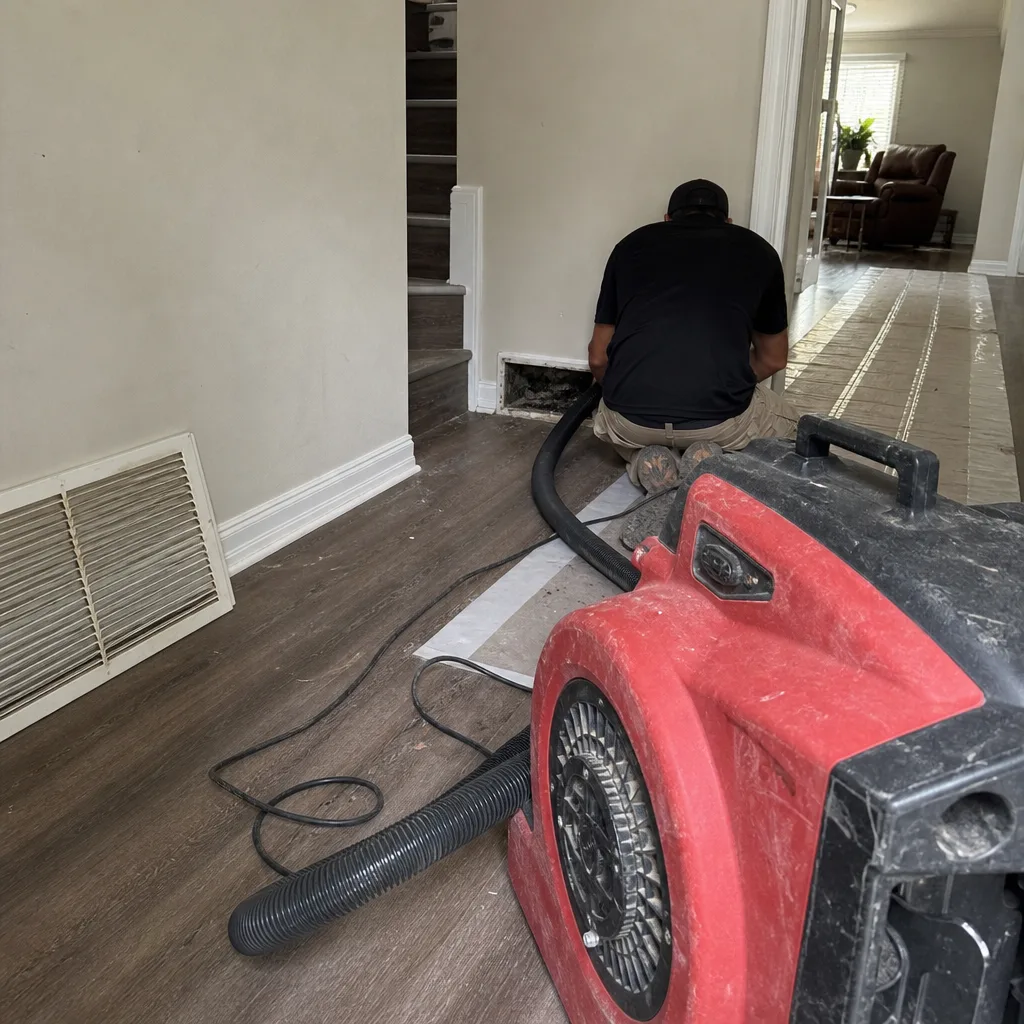 Before
 After
After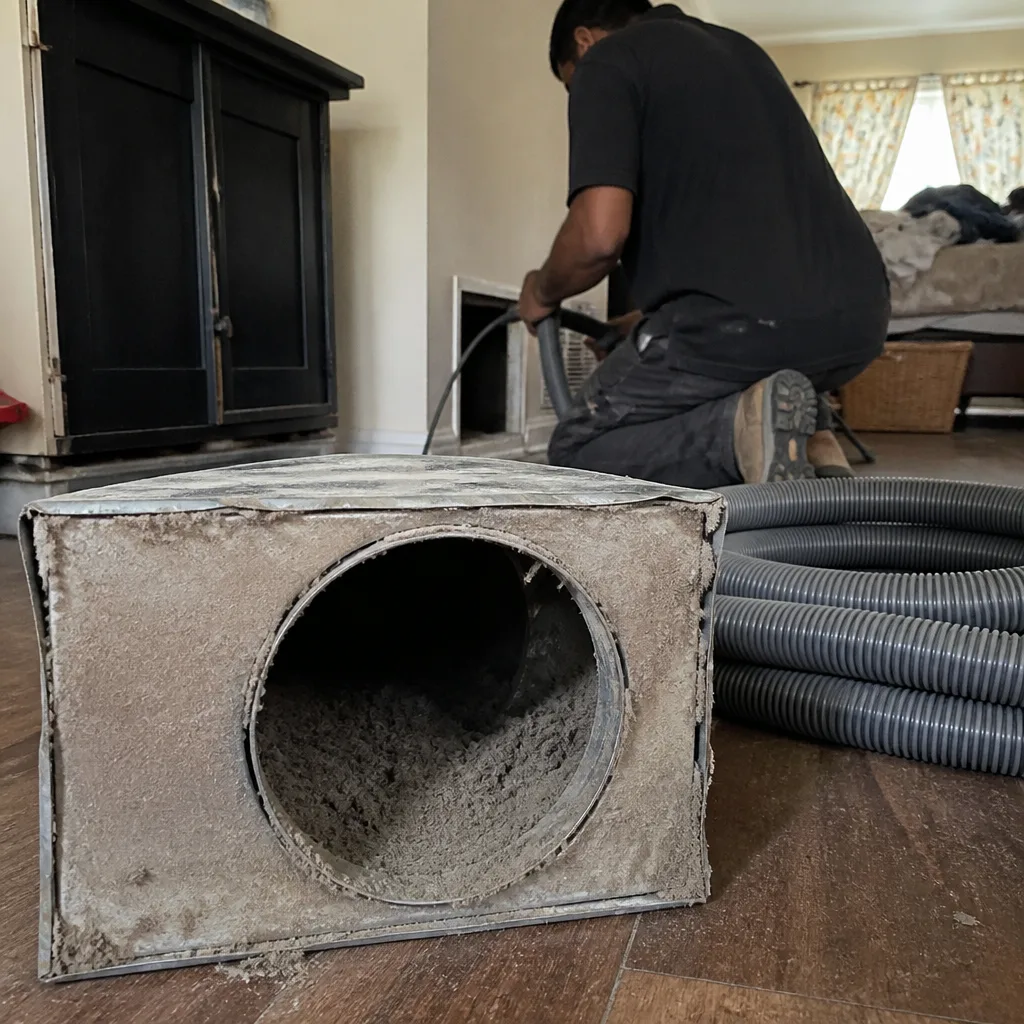 Before
 After
AfterWhen to Call a Professional
You should call a professional when your situation hits any of these markers: post-renovation dust throughout the home, visible mold or moisture staining near registers, rodent activity anywhere in the home’s history, a persistent musty smell from the AC, allergy symptoms that improve away from home, or a system that hasn’t been cleaned in a decade or more. You should also call if you attempted a DIY cleaning and now suspect you’ve dislodged a duct connection, which presents as a sudden increase in attic temperature, reduced airflow from specific registers, or a new whistling sound from the vents. Mortons Air Duct Houston offers free estimates in Houston – call (940) 314-5008 and we’ll tell you whether professional cleaning is actually necessary based on what we find in your specific system.
Frequently Asked Questions
Professional air duct cleaning in Houston typically runs $450 to $800 for a full system, depending on home size, number of HVAC systems, and contamination level. Our flat-rate pricing means the written quote you receive before work begins is the number on the invoice, with no per-vent add-ons. Call (940) 314-5008 for an exact quote on your system.
You can clean vent covers and the first 12 to 18 inches of accessible ductwork with a shop vac, which is genuinely useful surface maintenance in newer homes with clean filter records. You cannot clean the remaining duct system, which is where the heavier accumulation settles. A shop vac lacks the reach and negative-pressure setup needed to clean the full duct run.
In Houston’s climate, most homes benefit from professional cleaning every 3 to 5 years, with the interval shorter for pet owners, allergy sufferers, older homes, and post-renovation situations. See our Seasonal Air Duct Cleaning Care for Houston: Year-Round Homeowner’s Guide for timing tips. Newer homes with clean filter discipline and no pets may go 7-plus years with only light surface maintenance. The right interval depends on your specific home conditions, not a fixed schedule.
The significant price differences in Houston duct cleaning come down to what the company actually does: whether they clean the entire system under negative pressure with agitation tools or simply vacuum the visible openings, how long they spend on the job, and whether they verify the work with before-and-after documentation. A 45-minute visit with a portable vacuum and a 3-hour negative-pressure cleaning with inspection photos are different services with appropriately different prices. The cheapest quote is cheap because less work is being done.
Regular filter changes reduce but do not eliminate duct contamination, especially in Houston where humidity, pets, and pollen seasons add material to your airstream. Filters capture particles entering the HVAC unit, but anything that makes it past the filter, plus anything that enters through duct leaks, settles throughout the system. Filter discipline extends the interval between professional cleanings. It doesn’t replace them entirely.
Air duct cleaning addresses the HVAC system’s supply and return ductwork that circulates conditioned air through your home. Dryer vent cleaning in Houston addresses the separate exhaust duct that carries lint, heat, and moisture from your dryer to the outdoors. They’re different systems with different contamination types, different cleaning methods, and different safety implications. Both matter for different reasons.
The Bottom Line
The honest answer to the DIY versus professional question is that both have legitimate places. DIY surface maintenance on newer, well-maintained systems in pet-free homes is reasonable and saves money. Professional cleaning is the right choice when you have older flex duct, post-renovation contamination, moisture-related issues, rodents, or systems untouched for a decade or more. Houston’s humidity makes the professional case stronger here than in most cities, because the contamination in our ducts is moisture-bound and stubborn. The goal is matching the right approach to your specific situation, not applying a one-size-fits-all rule to every Houston home. If you’re uncertain which category you’re in, explore our more guides & resources or call (940) 314-5008, and we’ll tell you honestly what your system needs based on what we find when we look.
Written by Paul Adeyemi, Owner at Mortons Air Duct Houston, serving Houston since 2005.