
Last updated October 15, 2026
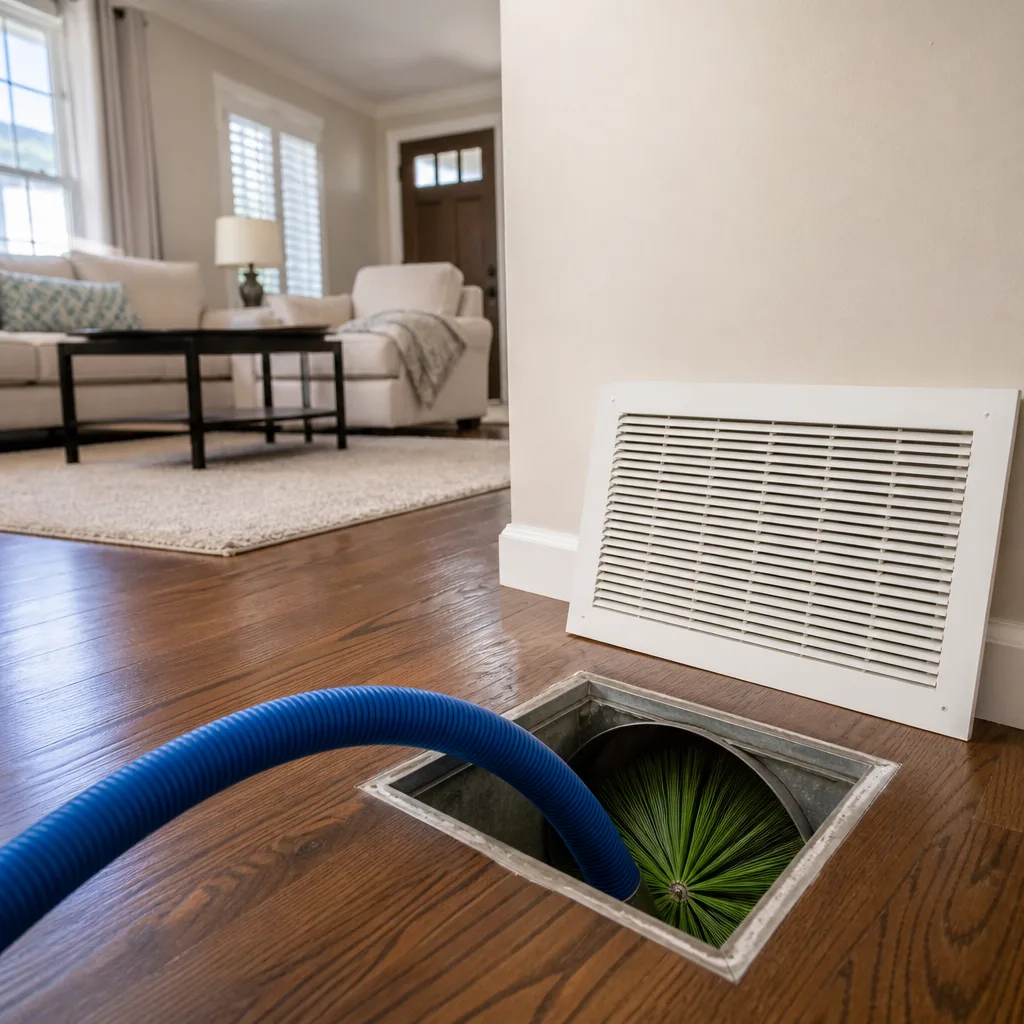 Whole-home duct cleaning
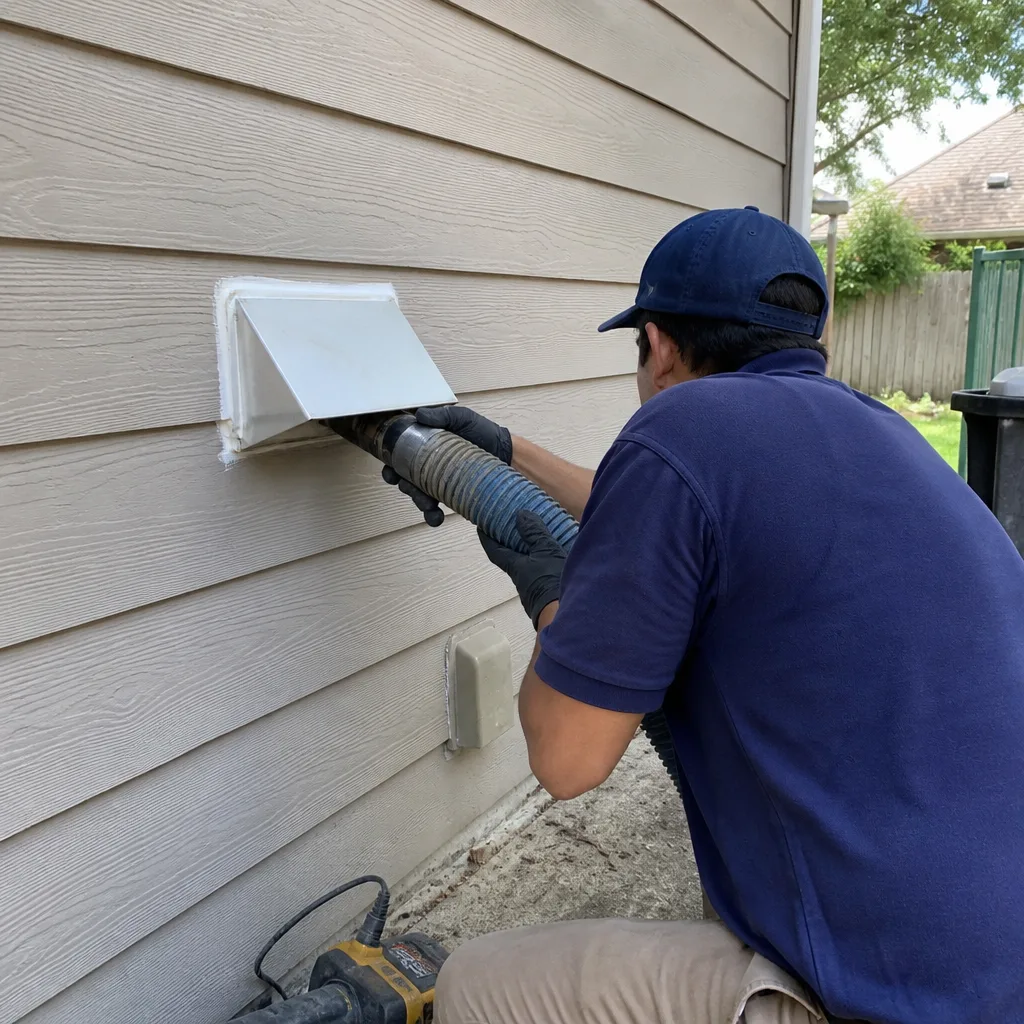
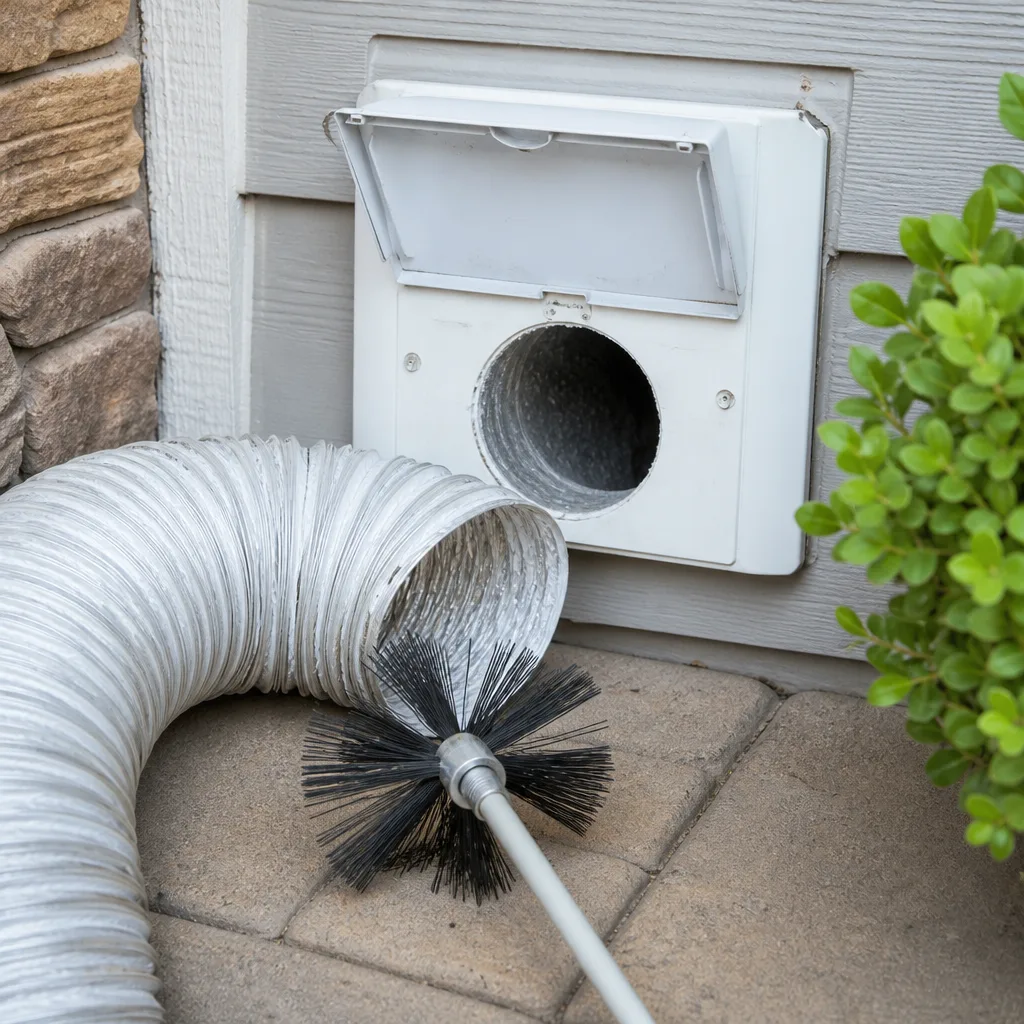 Dryer vent cleaning
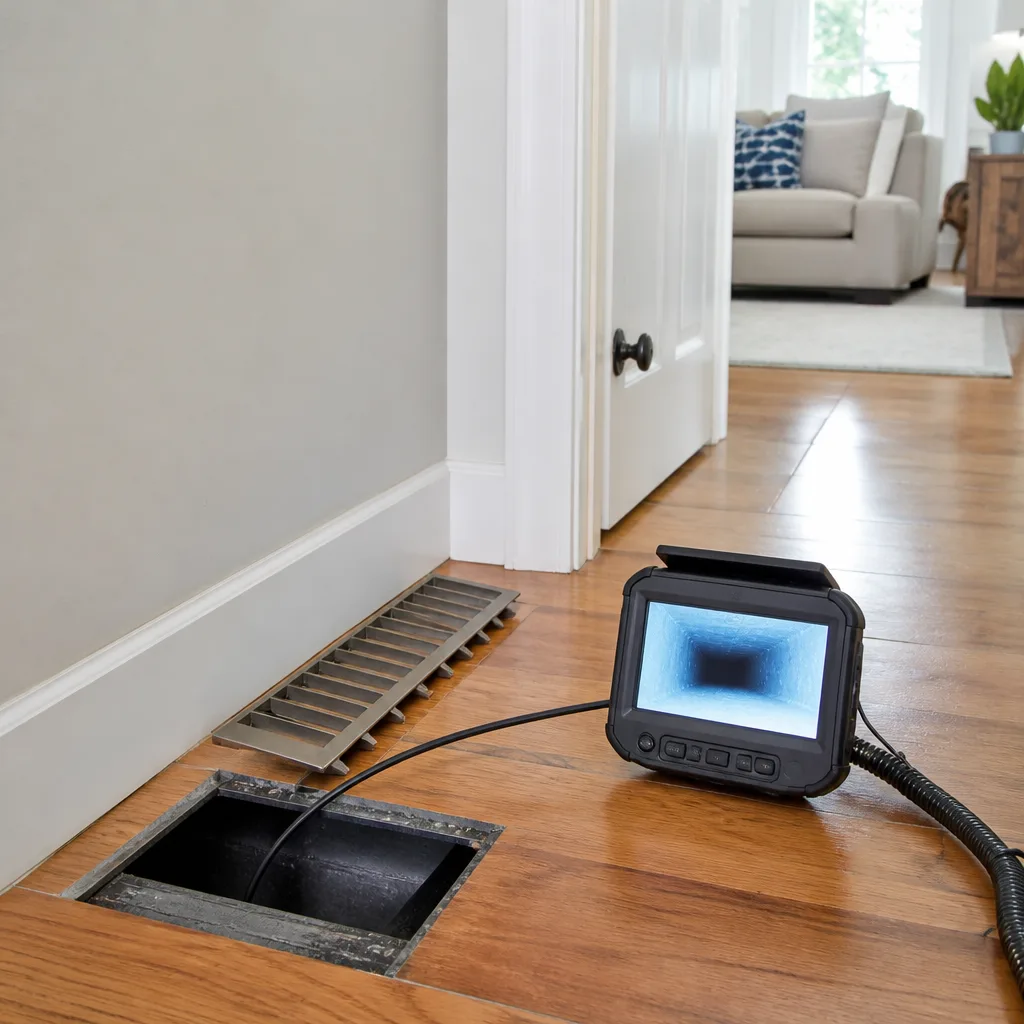 Camera inspection
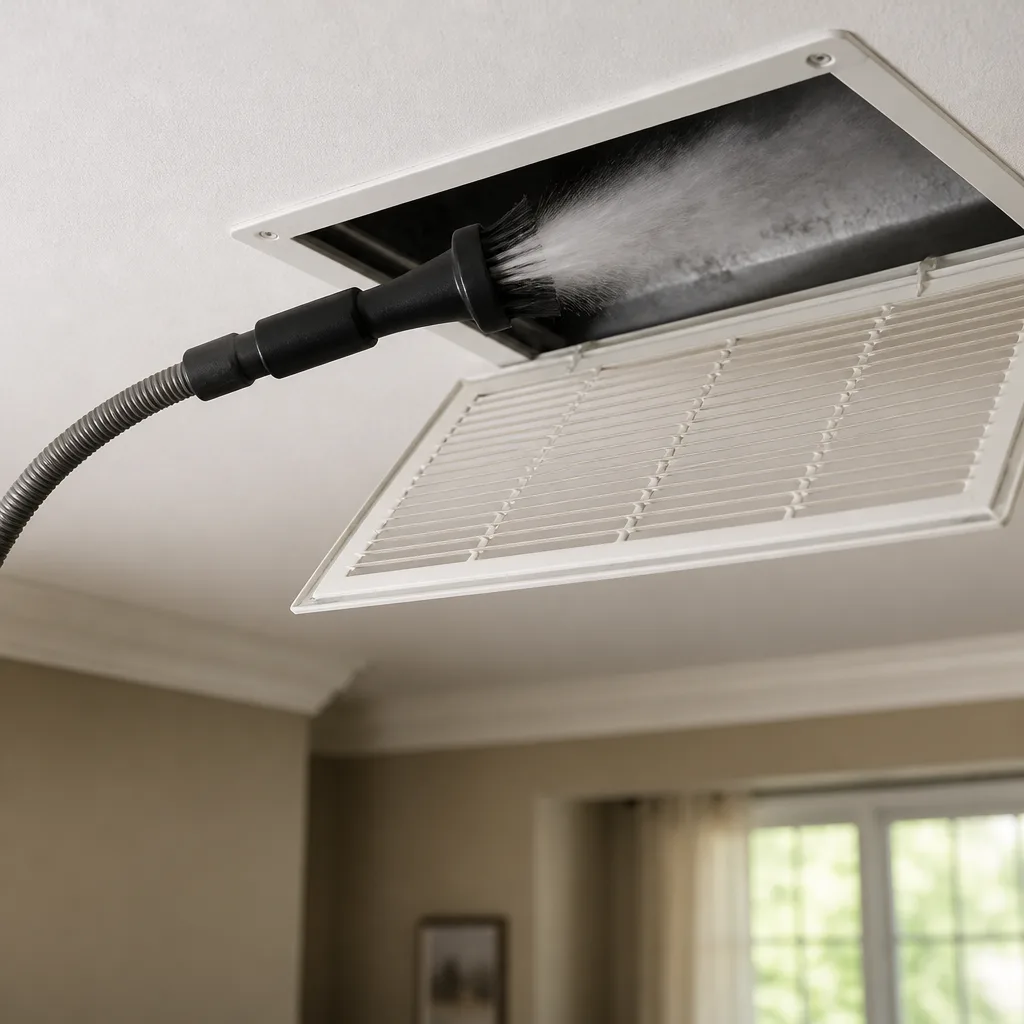 Sanitizing & deodorizing
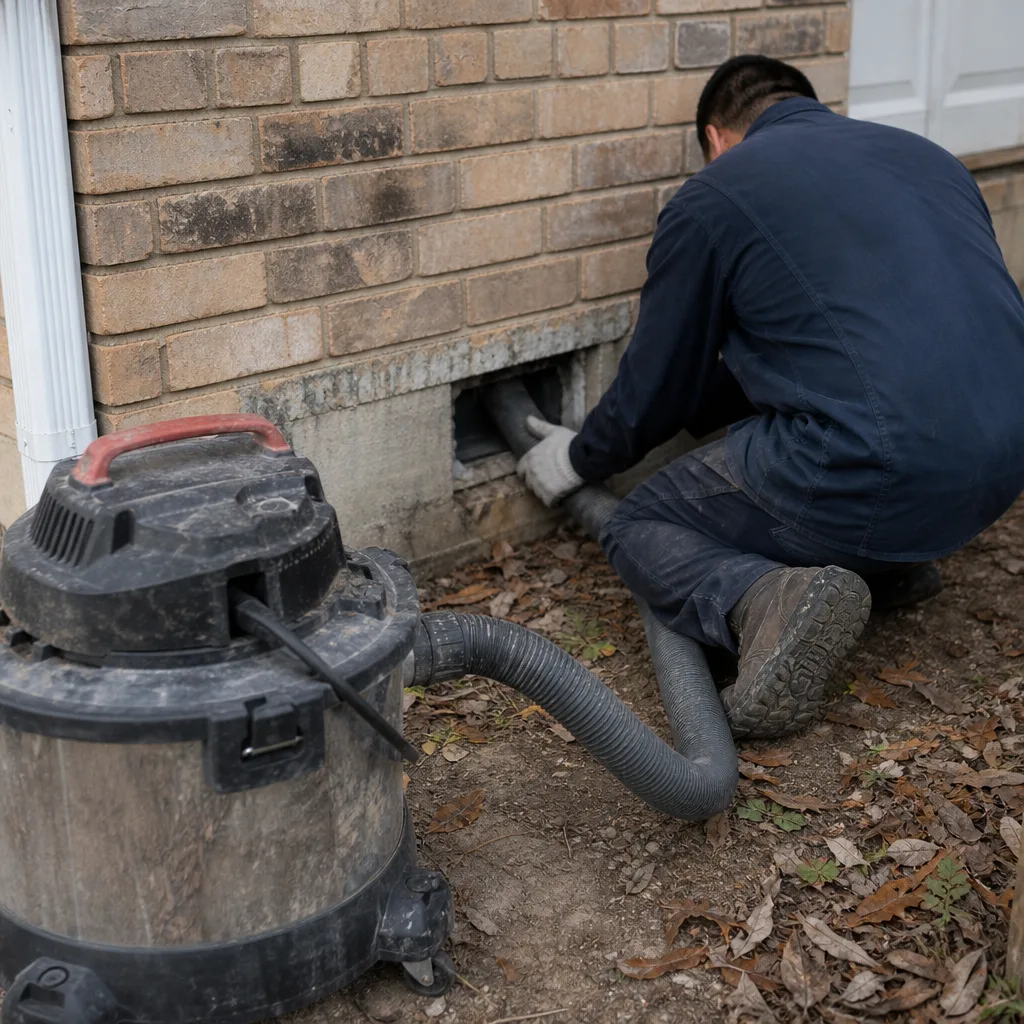
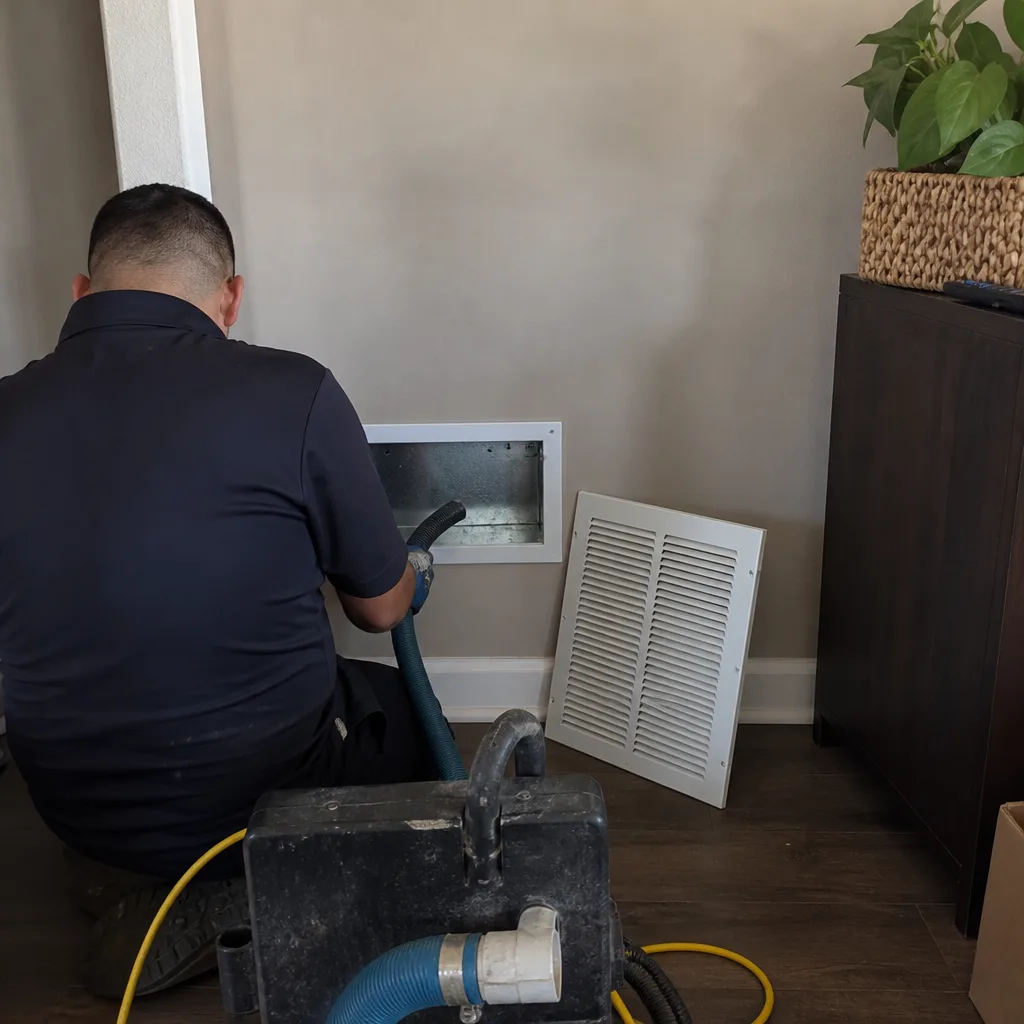
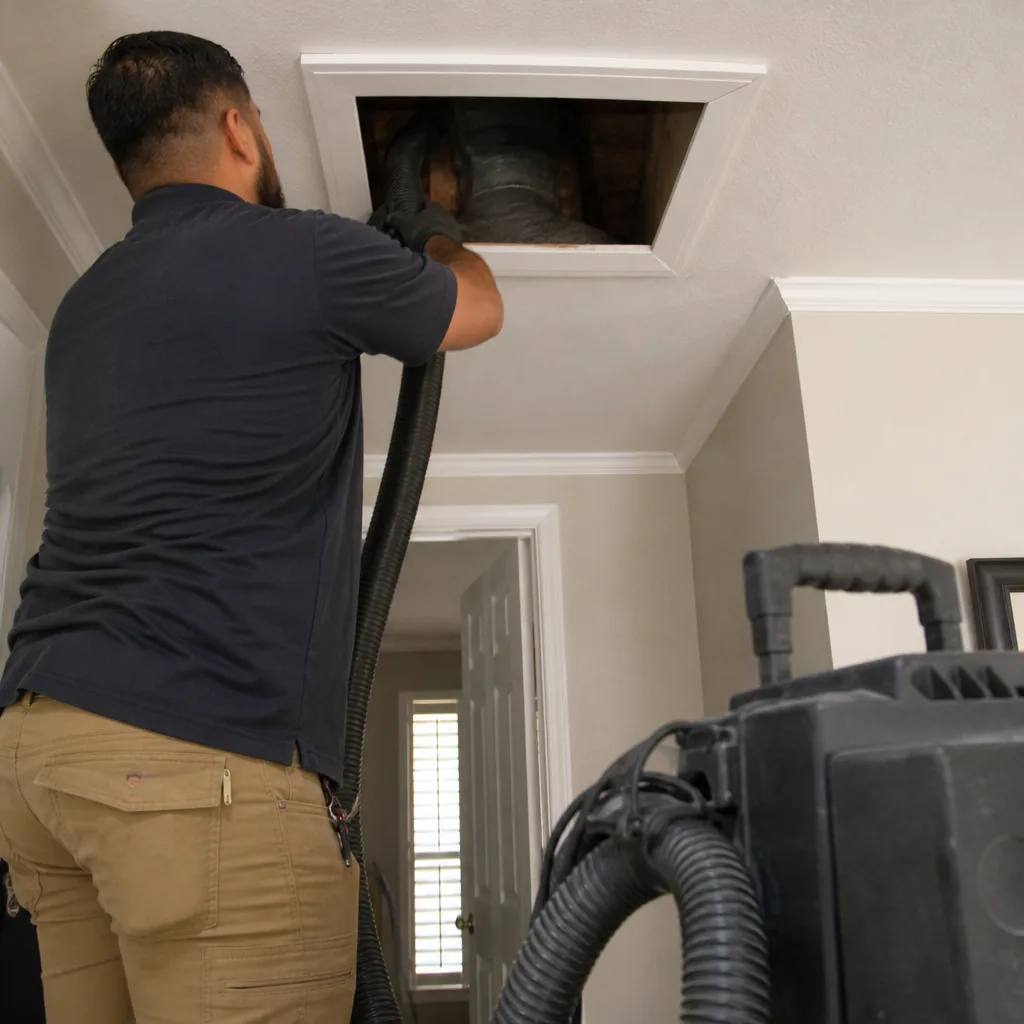
Whole-system duct and dryer vent check with before-and-after photos - you see exactly what came out of your vents
That "$99 whole-house special" is a bait ad - the real number appears once they are in your hallway, or the "clean" is a shop-vac at the register. We photograph the inside of your ducts before and after instead.
Air Duct Cleaning Warning Signs: A Houston Homeowner’s Reference Guide
The first real warning sign in a Houston home is rarely dust on the vent cover. It’s the smell: a faint, musty undertone when the AC first kicks on in March, one that most families have been calling “the house just needs to air out” for years. That smell is not the house. It’s the ductwork. This guide walks through the warning signs specific to Houston’s humidity, long cooling season, and the way our homes trap and recirculate air, so you can tell the difference between a minor annoyance and a duct system that’s quietly working against you. For a deeper dive, see The Complete Guide to Air Duct Cleaning in Houston.
Styles & brands we work with
Quick Answer
Air duct cleaning warning signs in Houston include a persistent musty odor when the AC starts, uneven room temperatures that survive HVAC service, room-specific allergy symptoms, streaking or discoloration at vent covers, and an AC system that short-cycles. If you notice two or more of these, the ductwork itself, not the HVAC unit, is the likely culprit. A professional inspection, or our Air Duct Cleaning services, will confirm what’s happening inside the trunk lines.
Table of Contents
- The Musty-on-Startup Smell: Houston’s Most Overlooked Warning Sign
- Uneven Room Temperatures That Persist After HVAC Service
- Room-Specific Allergies: When Symptoms Follow the Vent, Not the Season
- Vent Cover Visual Cues: Streaking, Discoloration, and Oily Residue
- Short-Cycling: The HVAC Signal That Ducts Are Restricted
- Dust Return Rate: How Fast the House Re-Dusts After Cleaning
- Airflow Noise Changes: Whistling, Rattling, and What They Mean
- Post-Renovation and Post-Storm Dust: When New Debris Enters the System
- Common Mistakes to Avoid
- When to Call a Professional
- Frequently Asked Questions
- The Bottom Line
The Musty-on-Startup Smell: Houston’s Most Overlooked Warning Sign
In a humid city like Houston, condensation forms inside ductwork more readily than almost anywhere else in the country. Our average relative humidity hovers near 75% for most of the year, and when cool conditioned air moves through ducts that pass through hot attics, the temperature differential creates moisture on the inside walls of the duct lining. That moisture, combined with the organic dust that every Houston home accumulates, creates the exact conditions where microbial growth takes hold. The result is a smell that most homeowners describe as “musty,” “damp,” or “like wet cardboard.”
Here’s the detail that gets missed: the smell is at its strongest in the first 30 to 60 seconds after the AC blower starts. That’s because the moisture and microbial material have had time to settle while the system was idle. When the fan kicks on, it pushes that smell into the living space all at once. Then, as the air keeps moving, the smell fades, not because it’s gone, but because your nose adapts and the concentration drops. Families in neighborhoods like Meyerland, Westbury, and Timbergrove tell us the same story: they smell it once a day, right at startup, and then forget about it until tomorrow.
What should worry you more is not the smell itself, but what it means for the duct lining. Once moisture has been present long enough to create odor, the insulation inside the ducts has likely absorbed some of it. Insulation that stays damp becomes a reservoir. The fix is not a spray or a filter change; it’s a mechanical cleaning of the inside of the duct system, followed by addressing the source of the condensation. In some cases, that means re-insulating sections of duct in the attic or sealing leaks that are pulling humid attic air into the supply lines.
We’ve used professional-grade equipment from Rotobrush and Nikro to address exactly this issue in Houston homes. The point of mentioning that is not to sell the machinery; it’s to explain that a real duct cleaning reaches the surfaces where the smell lives, which a standard HVAC tune-up does not touch.
Uneven Room Temperatures That Persist After HVAC Service
Every Houston home has a warm room. Usually it’s the upstairs bedroom on the west side, baking in the afternoon sun from April through October. That is not automatically a duct problem. But when you’ve had an HVAC technician out, the system checks out, the refrigerant is fine, the blower is fine, and the room is still eight degrees warmer than the rest of the house, the ductwork is the next place to look.
The trunk lines that run from your air handler through the attic or between floors carry a fixed volume of air. When the inside walls of those trunks accumulate a layer of dust, pet hair, and construction debris, the effective diameter of the duct shrinks. Airflow drops. The rooms farthest from the blower, the ones at the end of the longest duct runs, feel it first. They get less air than the rooms closer to the unit, and no amount of thermostat adjustment fixes that.
We see this pattern regularly in older Houston homes, especially those built in the 1970s and 1980s in areas like Sharpstown, Spring Branch, and the neighborhoods around Bellaire. Those homes often have original metal ductwork that has never been opened. The buildup inside can be dramatic, sometimes reducing the interior cross-section by 30% or more. When airflow is restricted that much, the HVAC system runs longer to satisfy the thermostat, and the far rooms never reach the same temperature as the rest of the house.
- Set your thermostat to your normal summer temperature and let the system run for at least an hour.
- Walk each room with a simple digital thermometer and note the difference between the thermostat reading and the room reading.
- If two or more rooms differ by more than 5 degrees, and an HVAC technician has recently cleared the equipment, suspect restricted duct airflow.
- Ask your air duct cleaning in Houston provider to inspect the trunk lines with a camera before quoting any work.
This is the kind of problem that a furnace filter change will never solve. It lives inside the duct itself.
Room-Specific Allergies: When Symptoms Follow the Vent, Not the Season
Houston’s pollen calendar is brutal, and separating seasonal allergies from indoor air quality problems is genuinely difficult. But there is one pattern that points away from pollen and toward duct contamination: symptoms that are consistent in one room and absent in others. If a child sneezes in their bedroom every morning but is fine in the living room, the difference is not the pollen outside. The difference is what’s coming out of the vents in that bedroom.
Duct systems are not uniform. Different branch lines accumulate different amounts of material depending on their length, their angle, the humidity they experience, and what has been introduced over the years. A bedroom that once belonged to a heavy-shedding dog, or one that shares a return path with a dusty laundry area, can carry a localized load of allergens that the rest of the house does not.
The same logic applies to household members with asthma or dust-mite sensitivity. Dust mites thrive at humidity levels above 50%, which Houston exceeds for most of the year. When dust accumulates inside ducts where humidity is high, the conditions are ideal for mites to multiply. Air moving through that section of duct picks up mite allergens and delivers them room by room. If one person in the family reacts and another does not, that does not mean the air is fine. It means the sensitive person is your canary.
What to Watch For
- Morning congestion or sneezing that improves after leaving the room
- Symptoms that are worse when the AC runs and better when it’s off
- One or two specific rooms causing problems, rather than the whole house
- Pets that sneeze or scratch more in particular areas
- Improvement when a room’s vents are temporarily closed, followed by return of symptoms when reopened
Room-specific symptoms deserve room-specific investigation. A camera inspection of the branch line serving that room will often show the answer within minutes.
Vent Cover Visual Cues: Streaking, Discoloration, and Oily Residue
Dust on a vent cover is normal in any Houston home. The city sits on a coastal plain, and our air carries fine particulates from construction, traffic, and the Gulf. But there are three visual patterns at the vent cover that indicate something more than ordinary dust accumulation, and they are easy to distinguish once you know what to look for.
Streaking: Dark streaks that radiate outward from the vent slats, often on the ceiling or wall surface around the register, indicate that moisture is present in the air stream. The streaks are actually very fine particles of dust binding to condensation that forms where the cold air meets the warm wall surface. In Houston’s summer, this pattern is common in homes where the duct insulation has degraded, allowing the duct itself to sweat. The fix is in the duct, not the paint.
Discoloration on the vent cover itself: White vent covers that have turned yellow or brown in a patchy pattern have been exposed to moisture over a long period. This is different from the uniform yellowing that comes from age. Patchy discoloration tracks the path of condensation, and it often accompanies the musty-smell problem described above.
Oily residue: A sticky, greasy film on or around a vent cover almost always comes from cooking aerosols that have been pulled into the return air path and deposited on surfaces. Once that film forms inside the ducts, it becomes a magnet for dust and pet hair, compounding the buildup. Homes that cook frequently, especially with oil, and run the kitchen exhaust fan only sometimes, see this pattern most. The residue builds fastest at the return grille but exists throughout the return duct path.
None of these three patterns is a reason to panic, and none of them means your home is unsafe. They are simply physical evidence that the air moving through the system is carrying more than it should, and that moisture or oil has entered the picture.
Short-Cycling: The HVAC Signal That Ducts Are Restricted
Short-cycling is when your AC system turns on, runs for a few minutes, shuts off, and repeats the cycle much more frequently than normal. Most homeowners and, frankly, many HVAC technicians attribute short-cycling to an oversized unit, a refrigerant problem, or a failing thermostat. Those are all real causes. But there is another one that gets overlooked: restricted airflow from heavily built-up ducts.
Here’s the mechanism. When duct interiors narrow due to debris accumulation, the total volume of air the system can move drops. The evaporator coil gets less warm air passing over it than it was designed for. The coil temperature drops. In some systems, this triggers safety sensors that shut the compressor down to prevent the coil from freezing. The system turns off, the coil warms back up, and the cycle repeats. From the homeowner’s perspective, the AC is “acting strange” or “running a lot but not cooling.” From the system’s perspective, it’s protecting itself from a problem that lives in the ducts.
This is particularly common in Houston because our long cooling season means systems run for 8 to 10 months a year. That’s 2,500 to 3,000 hours of annual runtime, far more than systems in most other parts of the country. More runtime means more air passing through the ducts, which means more material deposited per year. A Houston home with original ducts and 15 years of history can carry a significant internal load.
If a technician has checked the refrigerant, the thermostat, and the compressor, and the short-cycling continues, ask them to measure the static pressure of the system. Elevated static pressure is the mechanical signature of restricted airflow, and dirty ducts are one of the most common causes. The test takes minutes and requires an inexpensive tool that every competent HVAC or duct professional carries.
Dust Return Rate: How Fast the House Re-Dusts After Cleaning
There’s a simple, low-tech experiment that tells you more about your ducts than almost anything else: dust a few horizontal surfaces thoroughly, note the date, and watch how long it takes for a visible film to return. In a home where the ducts are reasonably clean, a wiped surface in a closed room with normal use should stay acceptably clean for a week or more. If you’re seeing a new layer of dust within two or three days, the ducts are recirculating particulate matter into the space.
The mechanics are straightforward. Your HVAC system cycles the entire air volume of your home through the ducts many times per day. If the interior of the ducts is loaded with dust, every cycle picks some of it up and redeposits it in the living space. The furnace or AC filter catches some, but a standard 1-inch filter captures only a fraction of what passes through, and a dirty or poorly sealed filter housing lets far more bypass. The dust that lands on your furniture came from somewhere, and in a Houston home where windows stay closed for most of the summer, the somewhere is usually the ductwork.
Homes with pets see this effect amplified. Pet dander is light, floats easily, and accumulates in the same places that dust does. The return air grilles in pet households often show a visible ring of fur and dander, and that material extends into the return duct path where no vacuum reaches. The problem is not that the pets exist; it’s that the system that moves their dander around the house has no way to clean itself.
For families with allergy issues, the dust return rate test is also a useful way to measure whether a duct cleaning made a difference. Properly cleaned ducts should reduce the re-dust rate noticeably. If they don’t, something else is contributing, and a good technician will help you find it.
Airflow Noise Changes: Whistling, Rattling, and What They Mean
Most Houston homeowners know the normal sounds of their house: the soft rush of the AC coming on, the faint click of the thermostat, the low hum of the condenser outside. Changes to those sounds deserve attention, not because they’re dangerous, but because they tell you something about the condition of the air path.
Whistling at a supply vent usually means the grille is partially closed, the damper has shifted, or the duct behind the vent has accumulated enough buildup to narrow the opening. Air moving through a smaller opening moves faster, and fast air whistles. If you’ve checked the vent and it’s fully open, the restriction is deeper in the line.
Rattling or flapping often indicates a section of duct that has come loose at a seam or a hanger that has failed. This is more common in Houston attics, where the extreme heat of summer, regularly exceeding 140 degrees in the upper parts of the house, accelerates the breakdown of tape and mastic. A loose duct joint pulls in attic air, which is humid and dusty, and every hour of runtime pulls more of it into the system.
A noticeable reduction in sound is worth noting too. Systems that have always produced a strong, audible airflow at the vents and then gradually go quiet are telling you that less air is moving. The blower is the same. The ducts are the variable. In our experience, a homeowner who notices the house has become “too quiet” is often right, and the explanation is found inside the trunk lines.
Post-Renovation and Post-Storm Dust: When New Debris Enters the System
Houston is a city that’s always under construction, and a significant number of homes have been renovated at least once. Kitchen remodels, bathroom additions, and roof replacements all generate dust that finds its way into duct openings. Drywall dust is particularly problematic: it’s fine enough to stay suspended in the air, and it coats the inside of ducts with a fine white film that ordinary filters cannot remove.
The same logic applies after major weather events. Houston’s windstorms and hurricane seasons bring wind-driven dust, pollen, and sometimes water through roof vents, soffit vents, and any gap in the building envelope. If a storm has blown water into your attic, even a small amount, the dust inside your ducts mixes with moisture and begins the cycle that leads to the musty smell described earlier.
If you’ve completed a renovation or your home has taken storm-related water, that’s the time to have the ducts inspected, not five years later. The cost of a camera inspection is minor compared to the cost of living with contaminated air, and the inspection will tell you whether the ducts took on dust, water, or both. In many cases, a post-renovation duct cleaning is one of the best investments a Houston homeowner can make, especially in the humid months when any deposited material is more likely to generate odor and microbial activity. Not sure whether to tackle it yourself or call a pro? Read our DIY vs Professional Air Duct Cleaning: The Houston Homeowner’s Decision Guide.
Common Mistakes to Avoid
- Assuming the smell is just the house. That musty note at AC startup is the single most reliable early warning sign in Houston homes. Write off the smell and you write off the chance to fix a small problem before it becomes a larger one.
- Treating the symptoms instead of the source. Upgrading to an Aprilaire high-efficiency filter is worthwhile, but it cleans the air after it leaves the ducts. The buildup inside the ducts remains. Air purifiers and duct cleaning are complementary, not substitutes.
- Assuming room temperature problems are always the HVAC unit. A good technician rules out the equipment first, and if the equipment checks out, the ducts are the next variable. Many homeowners pay for HVAC repairs that don’t solve the problem because the real issue is airflow.
- Ignoring one room’s allergy symptoms. It’s easy to attribute a child’s morning sneezing to seasonal allergies, but if the pattern follows the room and not the season, the vent serving that room is the more likely suspect.
- Using a shop vac to “clean” the vents yourself. Reaching into a vent cover with a household vacuum only removes what’s within a few inches of the opening. The trunk lines, branch lines, and return paths are untouched. Worse, aggressive DIY attempts can damage the duct lining.
- Choosing the lowest quote without asking what’s included. Duct cleaning in Houston varies widely in scope. A low price often means a vent-only service, not a full-system cleaning. Ask what equipment will be used, what areas will be reached, and whether the price includes the return side of the system.
- Waiting for a visible problem before acting. By the time dust is visibly puffing out of the vents, the buildup inside has been significant for a long time. The signs in this guide appear earlier.
When to Call a Professional
You don’t need to wait until every warning sign in this guide is present. If you’ve noticed two or more, especially in combination, like a musty smell paired with uneven room temperatures, or room-specific allergies paired with re-dusting within days, the time to act is now. A professional inspection uses a camera to look inside the ducts and gives you an evidence-based answer about what’s actually there. Morton’s Air Duct Houston offers free estimates in Houston, and every inspection includes a written price before any work starts. Call (940) 314-5008 and a live person will answer, any hour, any day.
Frequently Asked Questions
Air duct cleaning in Houston typically costs between $350 and $650 for a whole-home system, depending on the number of vents, the size of the home, and the level of buildup. At Morton’s Air Duct Houston, every quote is a written, whole-system price agreed before work starts, so there are no per-vent surprises when the technician arrives. Homes with extensive buildup, post-renovation dust, or duct systems that include the dryer vent may run higher, but the number you’re quoted is the number you pay.
Cheaper quotes usually reflect a smaller scope of work. A vent-only service that vacuums the visible openings and calls it done will cost less than a full-system cleaning that reaches the trunk lines, branch lines, and return path. The lower price is not a bargain; it’s a partial service. Ask any dryer vent cleaning in Houston or duct cleaning company to explain exactly what the price includes.
Ask for before-and-after photos of the interior of your ducts, not just a receipt. Morton’s Air Duct Houston includes a photo of the clean-up before the crew leaves on every job, and our technicians can show you the equipment readings and visual evidence from inside the system. If a company cannot or will not show you what was done, that answer tells you what you need to know.
Most Houston homes benefit from professional duct cleaning every 3 to 5 years, though homes with multiple pets, recent renovations, or family members with significant allergies may need it more frequently. Houston’s humidity and long AC runtime mean ducts here accumulate material faster than in cooler, drier cities. If you’ve never had the ducts cleaned in a home built before 2010, an inspection is overdue.
Yes. Duct systems are not uniform, and individual branch lines can carry localized loads of dust, pet dander, and microbial material that affect one room far more than the rest of the house. If symptoms follow a specific room and improve when the vent is closed or the person leaves the space, the branch line serving that room is the likely source.
In Houston’s climate, air duct cleaning is more relevant, not less. The combination of high humidity and year-round AC use creates conditions inside ducts that cooler cities rarely experience. Removing accumulated material, addressing any moisture issues, and ensuring the system is sealed properly directly addresses the factors that make Houston homes prone to musty odors and localized allergy symptoms.
The Bottom Line
Most Houston homeowners wait until they can see dust or smell something unmistakable before they think about their ductwork. The signs in this guide are earlier, subtler, and more useful. The musty note at AC startup, the warm room that survives an HVAC service call, the sneezing that stays in one bedroom, the streaks around a vent cover, and an AC system that short-cycles are not random annoyances. They are data. Read together, they tell you exactly what’s happening inside the ducts. The fix is straightforward, the price should be written and firm, and the result is a house that smells like itself again. For more guides & resources on keeping your Houston home’s air clean, explore our blog.
Written by Paul Adeyemi, Owner at Mortons Air Duct Houston, serving Houston since 2005.
See the difference
 Before
 After
After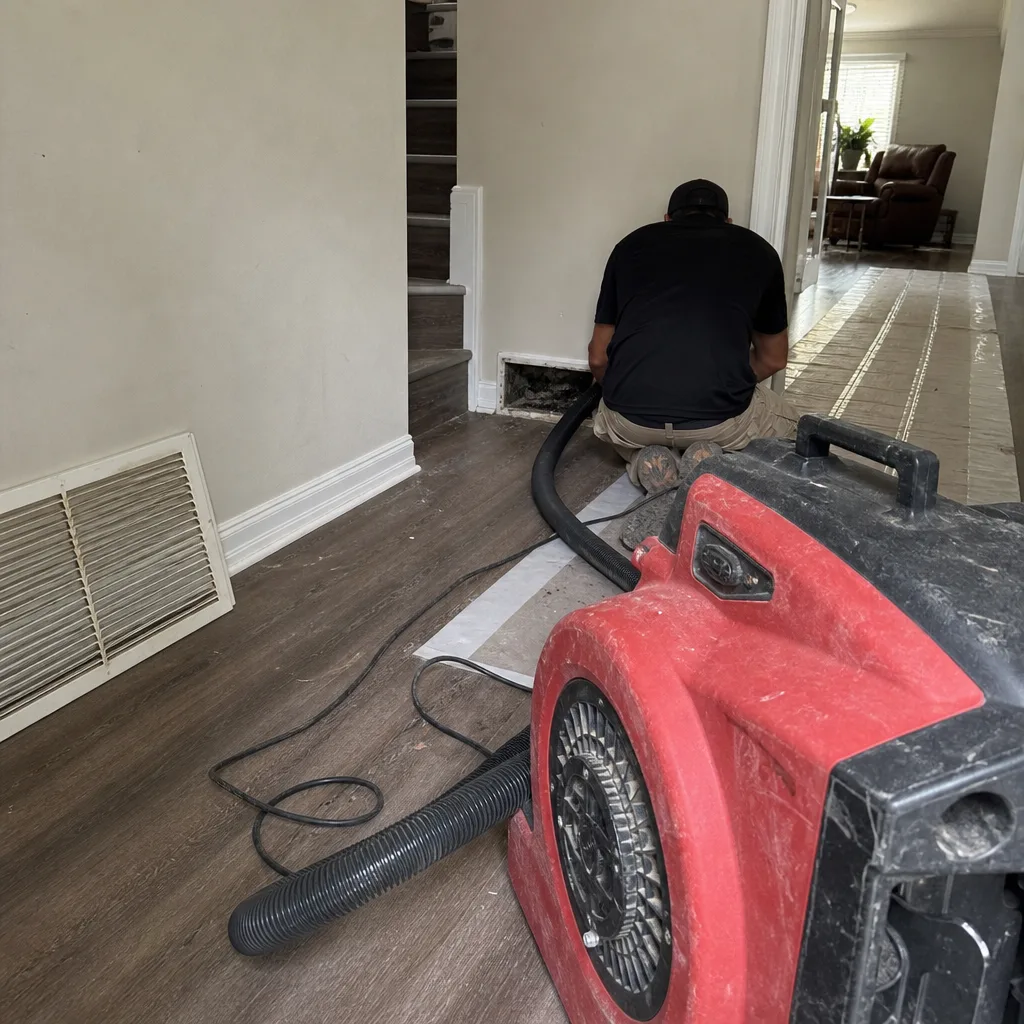 Before
 After
After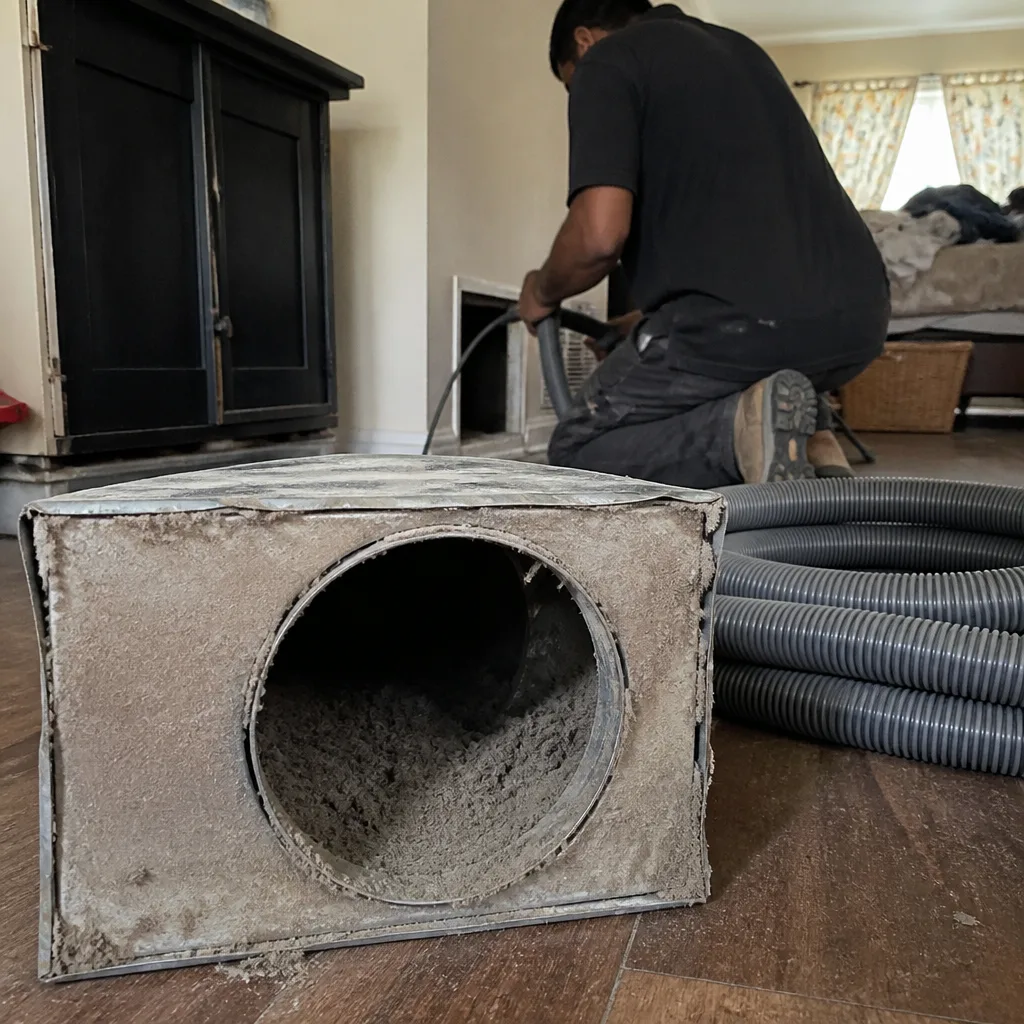 Before
 After
After